A bill of lading is an important document used in the transportation of goods. It provides essential information about a shipment, including the shipper, consignee, cargo, transportation route, and shipping instructions. In many shipping transactions, it serves as an important record connecting the parties involved in transporting and receiving goods.
Whether goods are transported domestically or internationally, accurate shipping documentation helps reduce confusion and supports smoother logistics operations. A properly prepared bill of lading can also make it easier to identify cargo, confirm shipment details, and maintain a clear record of the transportation arrangement.
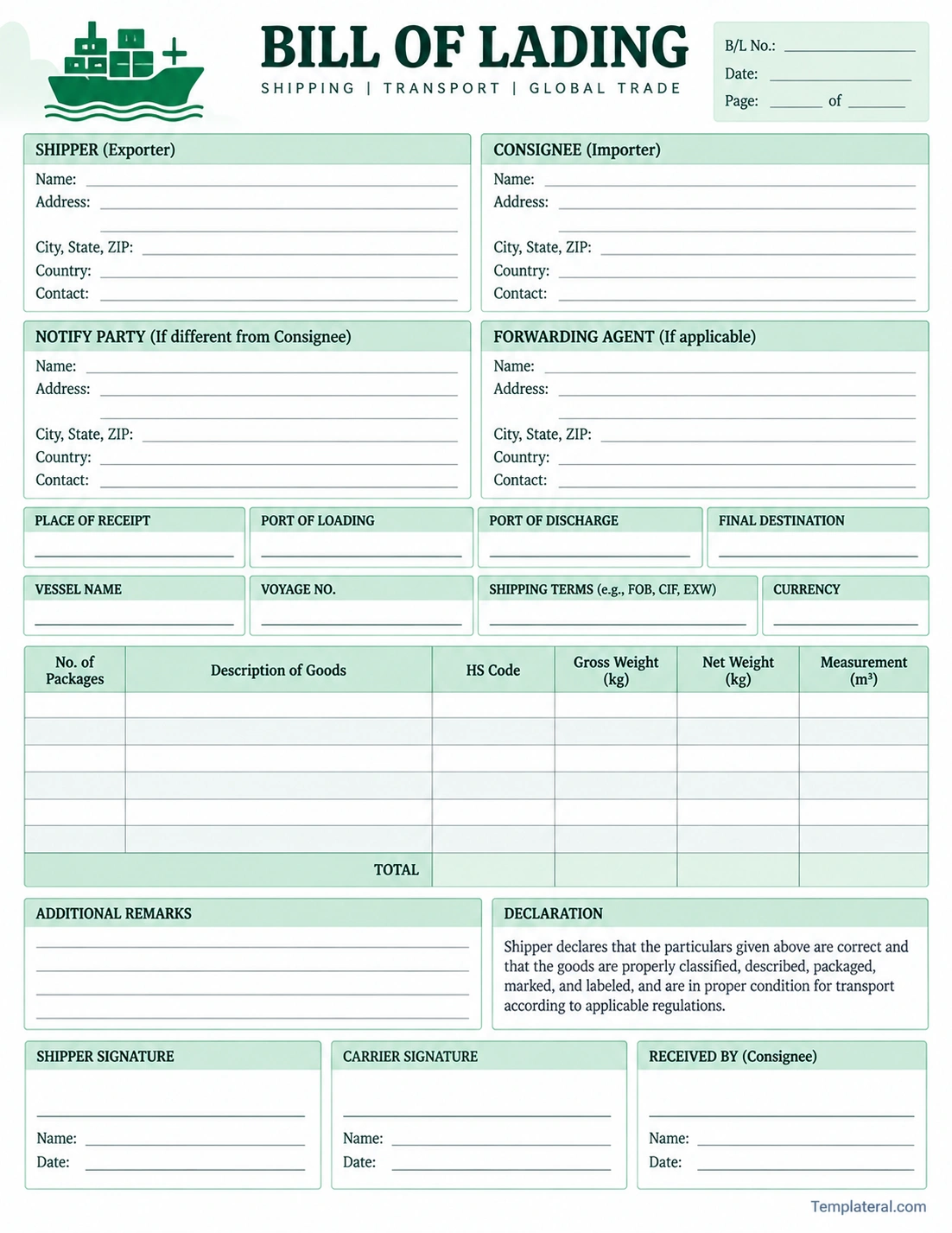
The printable template below provides a practical way to organize common bill of lading information in a clean and structured format.
What Is a Bill of Lading?
A bill of lading, often abbreviated as BOL or B/L, is a document associated with the shipment and transportation of goods. It records important information about the cargo and the parties involved in the shipment.
Depending on the type of transportation and the applicable terms, a bill of lading can serve several functions. It can provide evidence of the transportation agreement, act as a receipt for goods received for shipment, and, in certain forms, function as a document of title.
The exact legal effect of a bill of lading depends on the document, transaction, applicable law, and transportation arrangement. For this reason, businesses should make sure their shipping documents contain accurate information and meet the requirements applicable to their shipment.
What Information Is Included in a Bill of Lading?
A bill of lading typically contains detailed information that allows the shipment to be identified and handled correctly. The exact fields vary depending on the carrier, mode of transportation, and type of shipment.
Shipper Information
The shipper is the party sending or tendering the goods for transportation. A bill of lading commonly includes the shipper’s name, address, contact information, and other identifying details.
Consignee Information
The consignee is the party designated to receive the shipment. The document may include the consignee’s name, address, and contact information so that the carrier knows where and to whom the goods are intended to be delivered.
Notify Party
Some shipments include a notify party. This is a person or organization that should receive notification about the shipment or its arrival. The notify party may be different from the consignee.
Description of Goods
The cargo section identifies what is being shipped. A useful description should be sufficiently clear to distinguish the goods and support proper handling and documentation.
Depending on the shipment, information may include product descriptions, package counts, marks and numbers, model information, or other identifying details.
Weight and Measurements
Shipping documents may record gross weight, net weight, dimensions, volume, or other measurements. Accurate cargo measurements are important for transportation planning and documentation.
Shipping and Routing Information
A bill of lading can also contain transportation details such as the place of receipt, port of loading, port of discharge, final destination, vessel name, voyage number, or other routing information.
Key Functions of a Bill of Lading
A bill of lading can play several roles in the shipping process. These functions are particularly important because multiple parties may rely on the information contained in the document.
Receipt for Goods
The document can provide a record that goods were received for transportation. The information recorded may describe the quantity, packaging, and apparent condition of the cargo when accepted, subject to the terms and notations applicable to the shipment.
Evidence of the Carriage Arrangement
A bill of lading can document important terms relating to the transportation of goods. It helps establish a written record of shipment information and relevant instructions between parties.
Document of Title
Certain bills of lading can function as documents of title, depending on their form and the governing legal framework. This function is especially relevant in some commercial and international trade transactions.
Shipment Identification
A bill of lading provides a centralized record of shipment details. This can help shippers, carriers, freight forwarders, consignees, and other parties identify and track cargo information throughout the transportation process.
Types of Bill of Lading
There are different types of bills of lading, and terminology can vary depending on the transportation industry and legal context.
Master Bill of Lading
A master bill of lading is generally issued by a carrier or shipping line and can cover a consolidated shipment or transportation arrangement involving multiple parties.
House Bill of Lading
A house bill of lading may be issued by a freight forwarder or non-vessel-operating carrier for a customer’s shipment. It is commonly used in international freight arrangements.
Clean Bill of Lading
A clean bill of lading generally indicates that the goods were received without a notation recording apparent damage or deficiency in the condition or packaging, subject to the precise wording and circumstances of the document.
Claused or Foul Bill of Lading
A bill of lading may contain clauses or notations describing apparent damage, shortage, defective packaging, or another issue identified when the goods were received. The exact terminology and implications can vary by carrier and jurisdiction.
Through Bill of Lading
A through bill of lading can cover transportation involving more than one stage or mode of transport under a single transportation arrangement.
Bill of Lading vs. Packing List
A bill of lading and a packing list are both important shipping documents, but they serve different purposes.
A packing list primarily provides detailed information about the contents and packaging of a shipment. It can help recipients and logistics personnel identify packages and verify the contents.
A bill of lading is associated more directly with the transportation arrangement and provides information about the parties, cargo, routing, and shipping terms.
Both documents can be used together to create a more complete record of a shipment.
Bill of Lading vs. Commercial Invoice
A commercial invoice is generally used to document the commercial transaction and value of goods involved in an international sale. It can contain information such as the seller, buyer, products, quantities, prices, and applicable trade information.
A bill of lading, on the other hand, is primarily connected to the transportation of the goods. Depending on the shipment, both documents may be required as part of the broader shipping and customs documentation process.
How to Fill Out a Bill of Lading
Completing a bill of lading carefully can help prevent discrepancies during transportation. Before preparing the document, gather the shipment information and verify it against other relevant records.
Step 1: Enter the Shipper Details
Enter the full legal or business name and address of the shipper. Include contact details where required by the carrier or shipping process.
Step 2: Enter the Consignee Details
Provide the recipient’s correct name and delivery information. Double-check addresses and contact information before finalizing the document.
Step 3: Add Routing Information
Enter applicable origin, destination, ports, vessel information, voyage information, and other routing details requested by the carrier.
Step 4: Describe the Cargo
Record the number of packages and provide a clear description of the goods. Add relevant identification information such as marks, numbers, or classification details when required.
Step 5: Record Weight and Measurements
Enter accurate gross weight, net weight, dimensions, or volume according to the requirements of the shipment and carrier.
Step 6: Review the Document
Before signing or submitting the bill of lading, compare the information with purchase orders, packing lists, shipping instructions, and other relevant documents.
Important Bill of Lading Details to Check
Small errors in shipping documentation can create delays or require corrections. Use a simple review process before the document is finalized.
- Check the shipper’s legal or business name.
- Verify the consignee’s name and delivery address.
- Confirm the notify party when applicable.
- Check the cargo description.
- Verify package quantities.
- Confirm gross and net weights.
- Review dimensions or measurements.
- Check ports and final destination.
- Verify vessel and voyage information when applicable.
- Review shipping terms and special instructions.
- Check signatures and dates where required.
Common Bill of Lading Mistakes
Accurate information is essential when preparing shipping documentation. Some common mistakes can be avoided through a simple verification process.
Incorrect Consignee Information
An incorrect consignee name or address can create delivery problems. Always verify recipient information against the latest shipping instructions.
Vague Cargo Descriptions
A description that is too general may make it difficult to identify the shipment. Use a clear description that accurately represents the goods while following applicable carrier and regulatory requirements.
Incorrect Weight or Quantity
Package counts and shipment weights should be checked against packing records before the bill of lading is finalized.
Missing Special Instructions
If the carrier requires specific handling, routing, or documentation instructions, make sure the applicable information is included in the appropriate section.
Inconsistent Documents
Information on the bill of lading should be consistent with other shipment records whenever applicable. Differences between documents can create questions during transportation, delivery, customs processing, or document review.
Why Use a Bill of Lading Template?
A bill of lading template provides a structured starting point for organizing shipment information. Instead of creating the document from scratch, users can work from predefined sections for common shipping details.
A printable template can be particularly useful for businesses that need a straightforward worksheet for gathering information before transferring it into a carrier-specific or electronic shipping system.
However, a generic template should not automatically be treated as a substitute for a carrier’s required bill of lading. Different carriers, transportation modes, and jurisdictions may require specific fields, clauses, or formats.
Tips for Creating a Professional Bill of Lading
A professional shipping document should be easy to read and contain information in a logical order.
- Use clear section headings.
- Keep related information together.
- Use consistent terminology throughout the document.
- Make important shipment identifiers easy to locate.
- Leave enough space for cargo descriptions and notes.
- Verify all names, addresses, quantities, and measurements.
- Use the carrier’s required form when one is specified.
- Keep copies of completed shipping documents according to your business procedures.
Printable Bill of Lading Template
A printable bill of lading template can be used as a planning worksheet or reference when preparing shipment documentation. Common sections include shipper information, consignee information, notify party, forwarding agent, routing details, cargo descriptions, weights, measurements, remarks, declarations, and signatures.
The template can be printed and completed manually or used as a visual reference when preparing a digital bill of lading. Before using any template for an actual shipment, compare its fields with the requirements of the relevant carrier and transportation arrangement.
Bill of Lading Checklist
Use this quick checklist before completing or submitting a bill of lading:
- Shipment number: Is the reference number correct?
- Shipper: Is the sender’s information accurate?
- Consignee: Is the recipient’s information correct?
- Cargo: Are the goods clearly described?
- Quantity: Does the package count match the shipping records?
- Weight: Are the recorded weights accurate?
- Routing: Are origin and destination details correct?
- Terms: Are applicable shipping terms properly recorded?
- Signatures: Are required signatures and dates completed?
- Supporting documents: Does the information agree with related shipping records?
Conclusion
A bill of lading is an important shipping document that organizes key information about a shipment and the parties involved in its transportation. Depending on its form and applicable legal framework, it may also serve as a receipt for goods, evidence of a transportation arrangement, or a document of title.
Understanding the main sections of a bill of lading can make shipping documentation easier to prepare and review. Shipper and consignee information, cargo descriptions, quantities, weights, routing details, and signatures should all be checked carefully before the document is finalized.
A printable bill of lading template can provide a convenient starting point for organizing these details. For actual shipments, always make sure the final document follows the requirements of the relevant carrier, transportation method, transaction, and applicable regulations.
Download: Bill of Lading Template
