Volunteering is a noble act that allows individuals to contribute their time and skills to help others and make a positive impact on society. Whether it’s working at a local food bank, tutoring students, or participating in community clean-up projects, volunteers play a vital role in supporting various organizations and causes. However, it’s essential to have a system in place to accurately record the hours, dates, and tasks completed by volunteers. This is where a volunteer timesheet comes into play.
What is a Volunteer Timesheet?
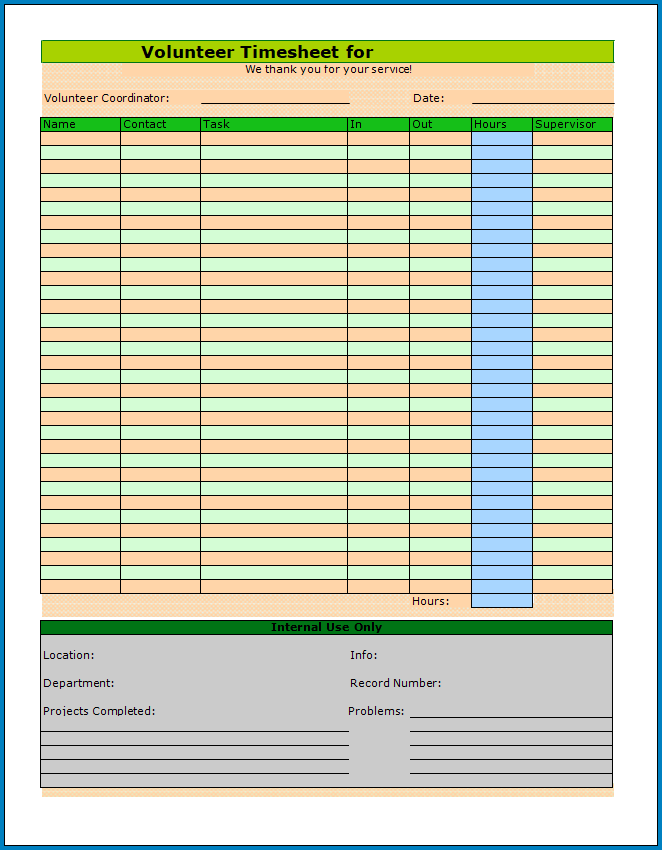
A volunteer timesheet is a document used to track the hours worked by individuals who are contributing unpaid service to an organization. It typically includes fields for the volunteer’s name, date, start and end times, tasks completed, and any notes or comments. By accurately recording this information, organizations can ensure that volunteers are properly recognized for their contributions and can track the impact of their volunteer programs.
Why Use a Volunteer Timesheet?
There are several reasons why it’s important to use a volunteer timesheet to track volunteer hours:
- Recognition: By keeping track of volunteer hours, organizations can properly recognize and thank volunteers for their contributions.
- Compliance: Some organizations may have specific reporting requirements or need to show proof of volunteer hours for grants or funding purposes.
- Impact Measurement: Tracking volunteer hours allows organizations to measure the impact of their volunteer programs and make data-driven decisions.
- Resource Allocation: Knowing how many hours volunteers are contributing can help organizations allocate resources more effectively and plan for future volunteer needs.
Key Elements of a Volunteer Timesheet
When creating a volunteer timesheet, it’s important to include the following key elements:
- Volunteer’s Name: This helps to identify who completed the volunteer hours.
- Date: Recording the date of the volunteer work is essential for tracking purposes.
- Start and End Times: Documenting the exact times the volunteer started and finished their work helps calculate the total hours worked.
- Tasks Completed: Including a section for volunteers to list the tasks they completed helps organizations understand the scope of the volunteer work.
- Notes/Comments: Providing space for volunteers to add any additional notes or comments can be helpful for clarification or feedback.
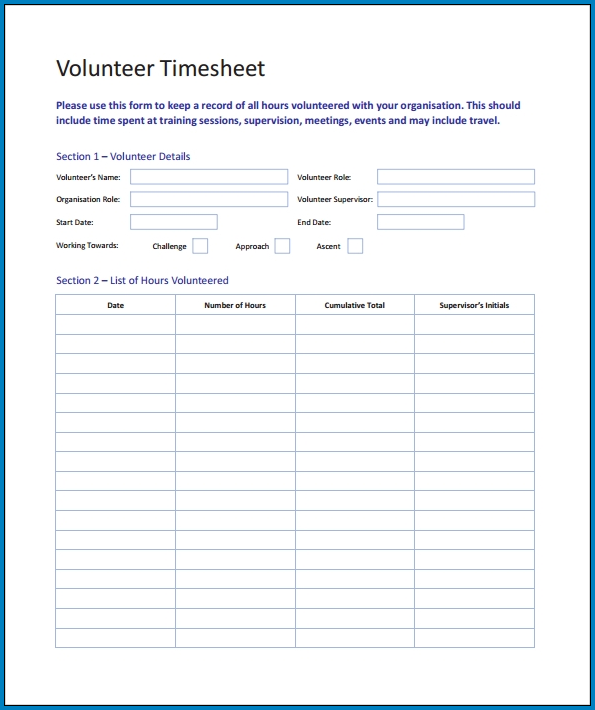
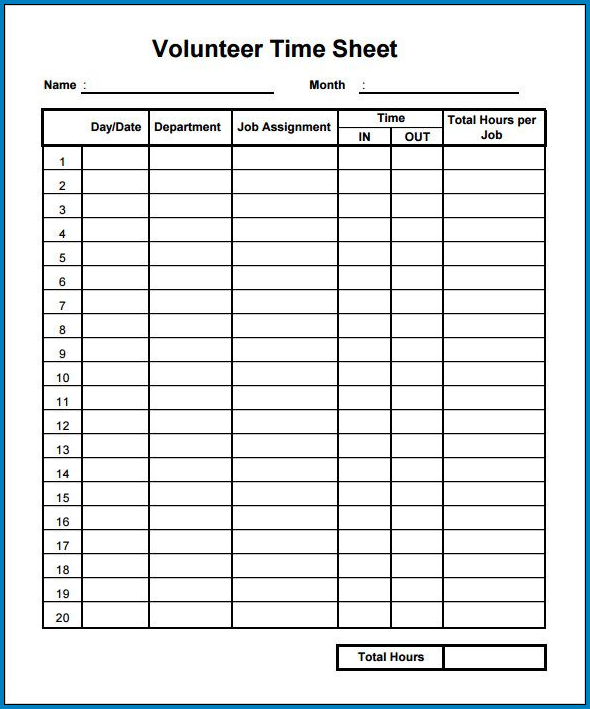
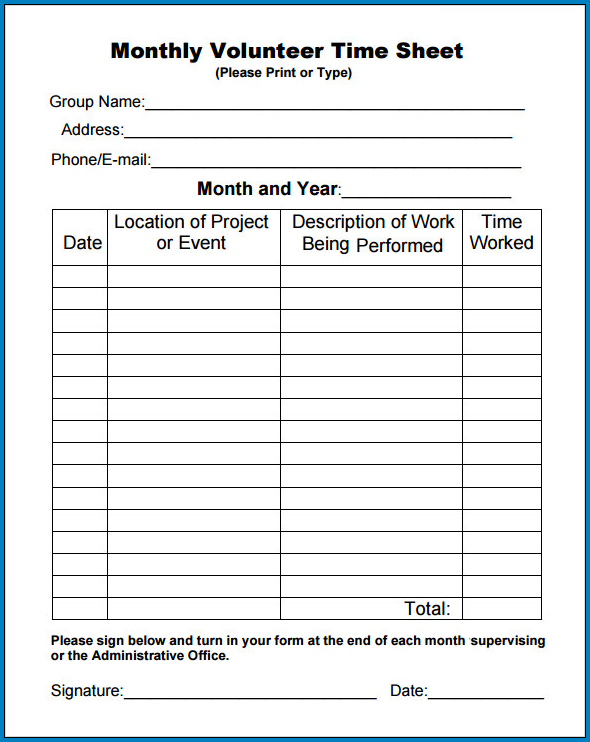
Samples of Volunteer Timesheet Template:

How to Create and Use a Volunteer Timesheet
Creating and using a volunteer timesheet is a straightforward process. Here are some steps to follow:
- Create a Template: Design a timesheet template that includes all the necessary fields mentioned above.
- Distribute the Timesheet: Provide volunteers with a copy of the timesheet to fill out after each volunteering session.
- Collect and Review Timesheets: Gather completed timesheets and review them for accuracy and completeness.
- Record Volunteer Hours: Enter the volunteer hours into a centralized database or tracking system for future reference.
- Use the Data: Analyze the data collected from the timesheets to track volunteer hours, measure impact, and make informed decisions.
Tips for Using a Volunteer Timesheet Effectively
To make the most of your volunteer timesheet, consider the following tips:
- Communicate Clearly: Provide volunteers with clear instructions on how to fill out the timesheet and why it’s important.
- Regular Reminders: Send reminders to volunteers to submit their timesheets on time to ensure accurate tracking.
- Review and Verify: Take the time to review and verify the information on the timesheets to catch any errors or discrepancies.
- Utilize Technology: Consider using online timesheet tools or software to streamline the process and improve accuracy.
- Express Gratitude: Show appreciation to volunteers for their time and effort by acknowledging their contributions on the timesheets.
In Conclusion
Using a volunteer timesheet is an essential tool for organizations to accurately record the hours, dates, and tasks completed by individuals contributing unpaid service. By implementing a timesheet system, organizations can track volunteer hours, measure impact, and ensure that volunteers are properly recognized for their contributions. Remember to include key elements such as the volunteer’s name, date, start and end times, tasks completed, and notes/comments on the timesheet. By following best practices and tips for using a volunteer timesheet effectively, organizations can optimize their volunteer programs and make a positive difference in their communities.
