A requirement traceability matrix (RTM) is a crucial document in project management that plays a vital role in ensuring the success of a project. It serves as a roadmap that maps and tracks project requirements to various project artifacts, such as test cases, design documents, and code, throughout the project lifecycle. By maintaining a clear link between requirements and project deliverables, the RTM helps in improving project quality, reducing risks, and enhancing communication among stakeholders.
What is a Requirements Traceability Matrix (RTM)?
A Requirements Traceability Matrix (RTM) is a document that establishes a connection between project requirements and project deliverables. It provides a systematic way to track each requirement throughout the project lifecycle, ensuring that all requirements are properly addressed and implemented. The RTM serves as a tool to trace the origin of each requirement and verify its status in relation to project artifacts.
Why is Requirement Traceability Important?
Requirement traceability is essential in project management for several reasons:
Completeness of Requirements
One of the primary reasons why requirement traceability is important is to ensure the completeness of project requirements. Without a clear link between requirements and project artifacts, there is a risk of missing crucial elements that can impact the project’s success. By using an RTM, project managers can verify that all requirements are properly addressed and implemented.
Communication Among Stakeholders
Another key aspect of requirement traceability is improving communication among stakeholders. When project requirements are effectively traced to project artifacts, there is better clarity and understanding among team members, clients, and other stakeholders. This leads to smoother collaboration, fewer misunderstandings, and ultimately, improved project outcomes.
Risk Mitigation
Requirement traceability also plays a critical role in risk mitigation. By identifying potential gaps or inconsistencies in project requirements early on, project managers can take proactive measures to address these issues and mitigate risks. This ensures that the project stays on track and delivers the expected results within the defined timeline and budget.
Quality Assurance
Ensuring that all requirements are properly addressed and implemented is essential for maintaining the quality of project deliverables. The RTM helps in tracking requirements throughout the project lifecycle, from initial planning to final implementation, ensuring that each requirement is met satisfactorily. This leads to higher quality outcomes and increased stakeholder satisfaction.
Overall, requirement traceability is a fundamental aspect of project management that contributes to project success by ensuring completeness, enhancing communication, reducing risks, and maintaining quality throughout the project lifecycle.
Types of Traceability Test Matrix
There are different types of traceability matrices used in project management, including:
Forward Traceability
Forward traceability involves linking requirements to project artifacts that are developed later in the project lifecycle. This type of traceability ensures that all requirements are aligned with the final deliverables of the project. By establishing a clear link between requirements and project artifacts, forward traceability helps in maintaining consistency and coherence in the project’s development process.
Backward Traceability
Backward traceability matrix connects project artifacts to the original requirements, ensuring that all deliverables are aligned with the project requirements. This type of traceability is essential for verifying that each project artifact is directly linked to a specific requirement, ensuring that there are no gaps or discrepancies in the project deliverables. Backward traceability helps in validating that the project meets the specified requirements and objectives.
Bi-directional Traceability
A bi-directional traceability matrix establishes links in both directions, ensuring that requirements are traced to project artifacts and vice versa. This type of traceability provides a comprehensive view of the relationship between requirements and project deliverables, allowing stakeholders to track the progress and status of each requirement throughout the project lifecycle. Bi-directional traceability ensures that there is a two-way communication between requirements and project artifacts, facilitating better decision-making and project management.
Each type of traceability matrix serves a specific purpose in project management and contributes to ensuring the successful implementation of project requirements.
Who Needs Requirement Traceability?
Requirement traceability is beneficial for various stakeholders involved in a project, including:
Project Managers
Project managers rely on the RTM to ensure that project requirements are met and project deliverables are aligned with stakeholder expectations. By using the RTM, project managers can track the progress of each requirement and identify any gaps or inconsistencies early on. This helps in making informed decisions, managing risks, and ensuring successful project outcomes.
Developers
Developers use the RTM to understand the relationship between requirements and project artifacts, guiding them in the development process. By having a clear link between requirements and project deliverables, developers can ensure that they are implementing the right features and functionalities according to the project requirements. This leads to efficient development processes and high-quality software products.
Testers
Testers refer to the RTM to ensure that test cases cover all project requirements and validate that the project deliverables meet the specified criteria. By tracing requirements to test cases, testers can verify that all aspects of the project requirements are thoroughly tested and validated. This helps in detecting any defects or issues early in the testing phase, leading to improved product quality and customer satisfaction.
Overall, requirement traceability is essential for all stakeholders involved in a project to ensure alignment, consistency, and successful project outcomes.
How to Create an Effective Traceability Matrix
Creating an effective traceability matrix involves the following steps:
Identify Project Requirements
Begin by gathering and documenting all project requirements, ensuring they are clear, concise, and measurable. Work closely with stakeholders to understand their needs and expectations, and document each requirement with a unique identifier for easy tracking.
Define Project Artifacts
Determine the project artifacts, such as test cases, design documents, and code that will be linked to the requirements in the RTM. Establish a clear connection between requirements and project artifacts to ensure that each requirement is properly addressed and implemented.
Establish Traceability Links
Create a matrix that maps each requirement to its corresponding project artifact, ensuring a clear and concise linkage. Use unique identifiers for each requirement and project artifact to easily trace the relationship between them. Regularly update the RTM to reflect any changes or updates in project requirements or artifacts.
Maintain and
Maintain and Update
Regularly review and update the RTM throughout the project lifecycle to ensure that all requirements are properly addressed and implemented. As the project progresses, new requirements may emerge, or existing requirements may change. It is essential to keep the RTM up-to-date to reflect these changes and maintain the integrity of the traceability links.
Collaborate with Stakeholders
Involve stakeholders in the process of creating and maintaining the RTM to ensure alignment with project goals. Collaborating with stakeholders helps in gaining valuable insights, clarifying requirements, and resolving any discrepancies or conflicts. By working together, stakeholders can ensure that the RTM accurately reflects the project’s objectives and meets the needs of all parties involved.
Use Tools and Templates
Utilize project management tools and templates to streamline the creation and maintenance of the RTM. There are various software applications and templates available that can assist in organizing requirements, linking them to project artifacts, and generating reports. These tools can help in automating the traceability process, saving time and ensuring accuracy in managing project requirements.
Regularly Review and Audit
Regularly review and audit the RTM to ensure that all requirements are properly traced and implemented. Conducting periodic reviews helps in identifying any discrepancies or gaps in the traceability links and allows for timely corrective actions. Auditing the RTM ensures that it remains accurate, up-to-date, and aligned with the project’s objectives throughout its lifecycle.
By following these steps and best practices, project managers can create an effective Requirements Traceability Matrix that enhances project success, improves communication among stakeholders, and ensures the quality and completeness of project deliverables.
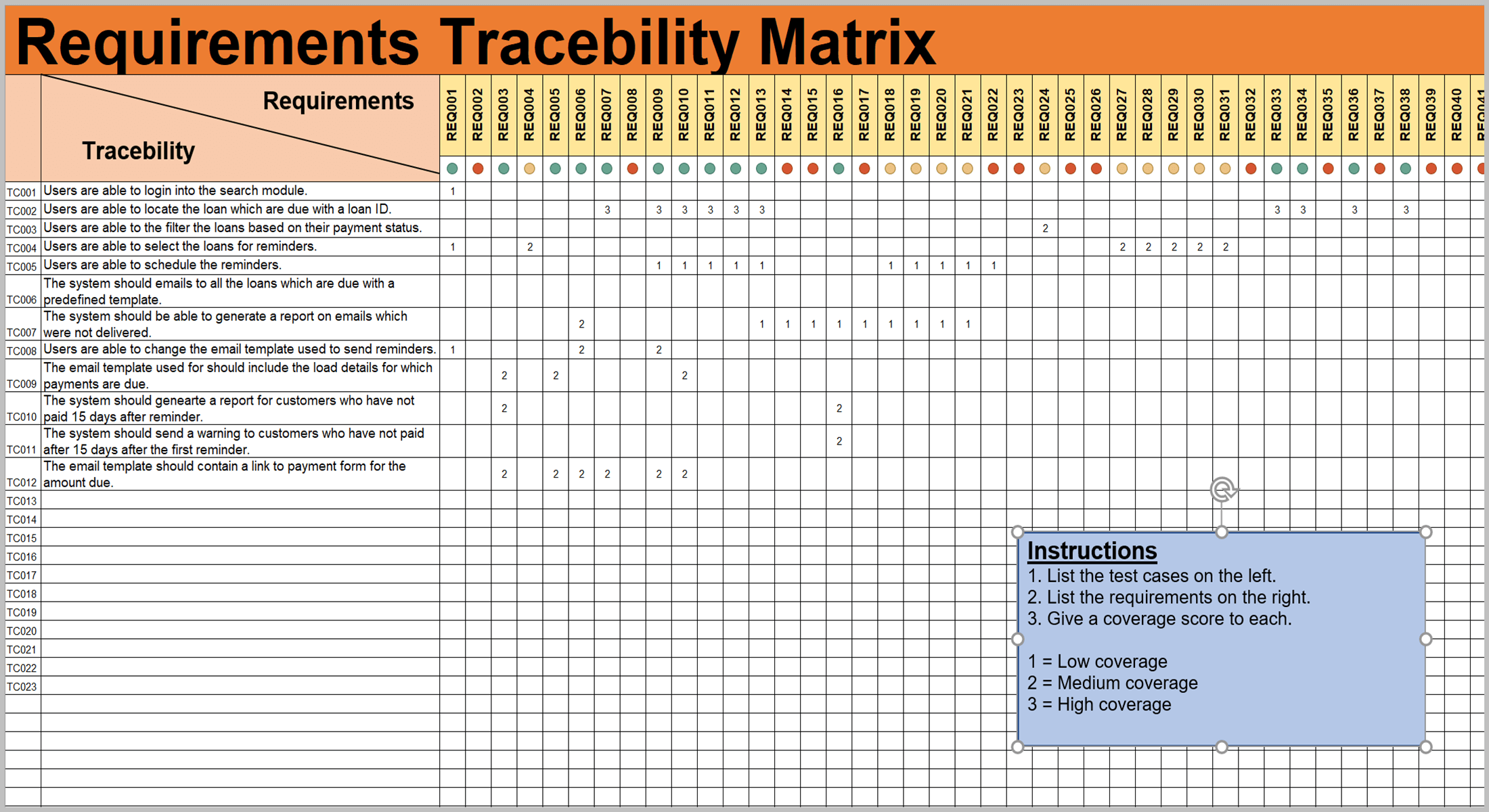
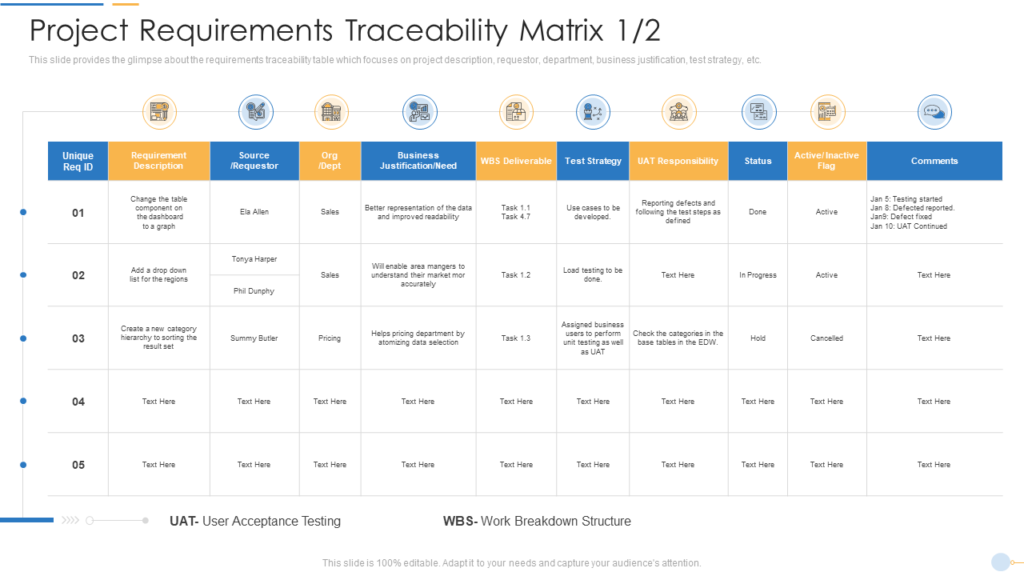
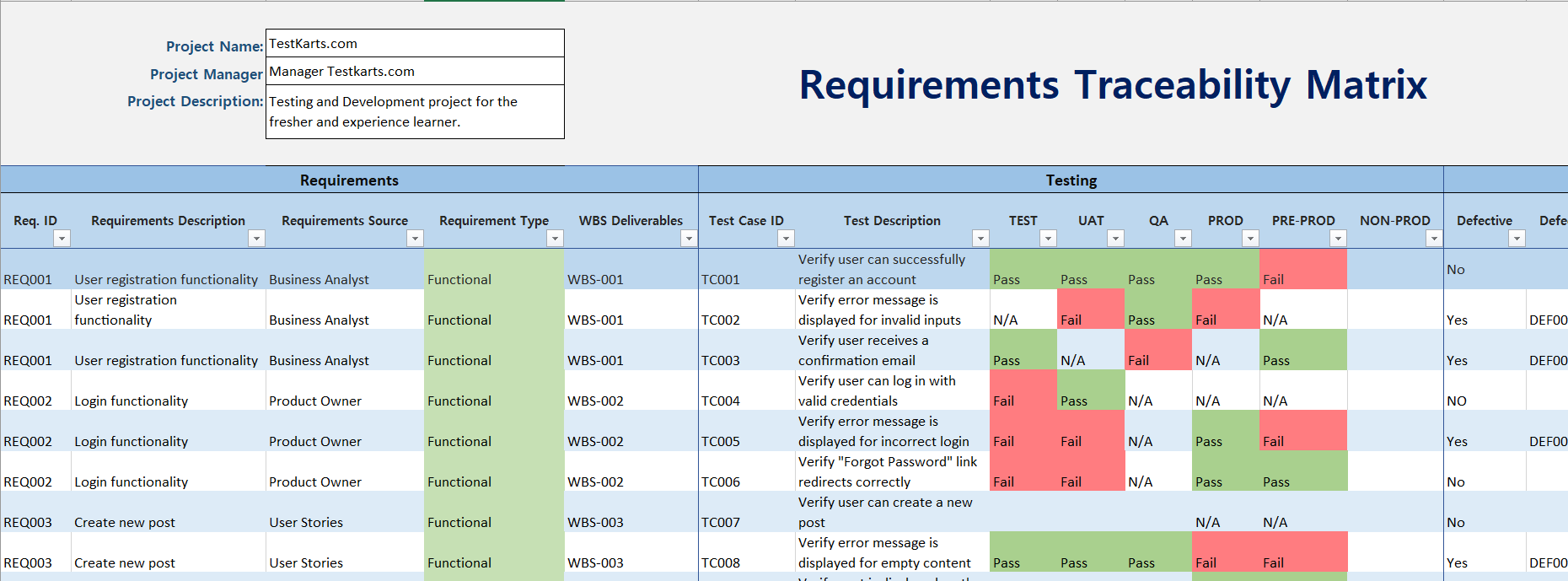
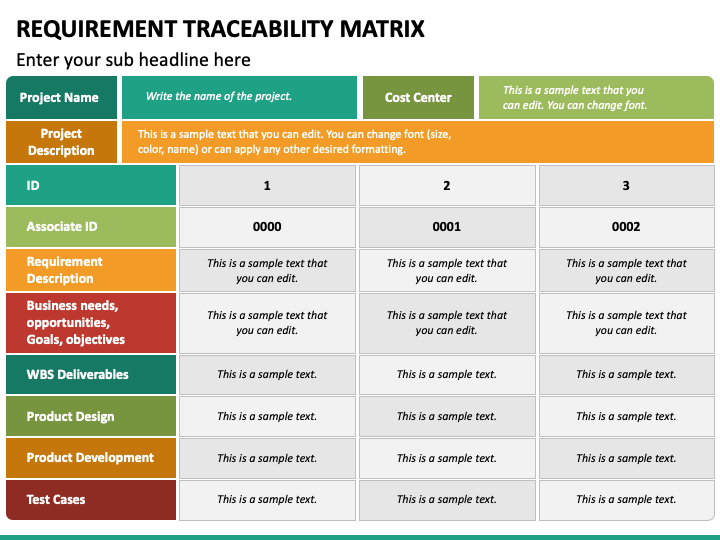
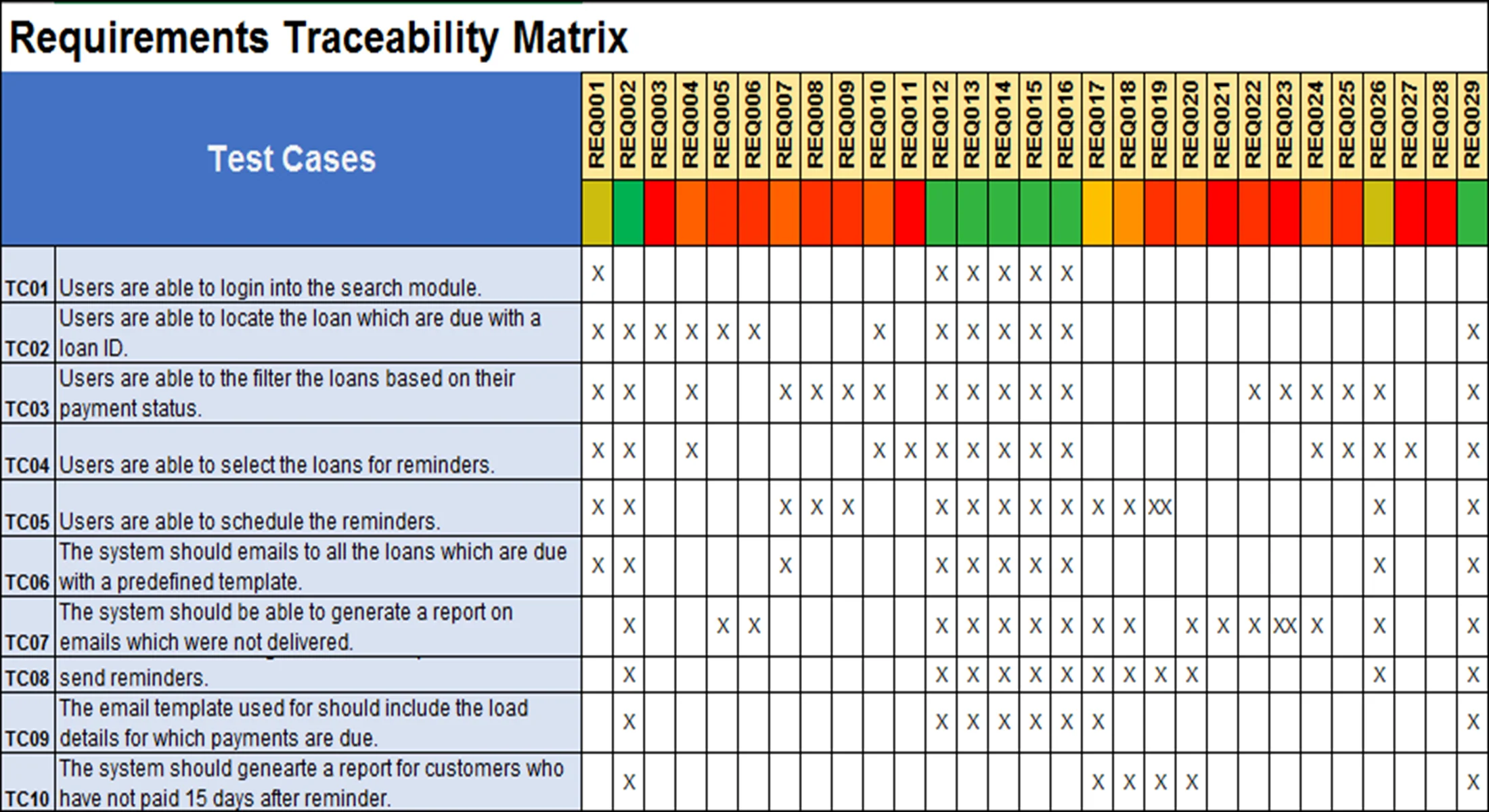
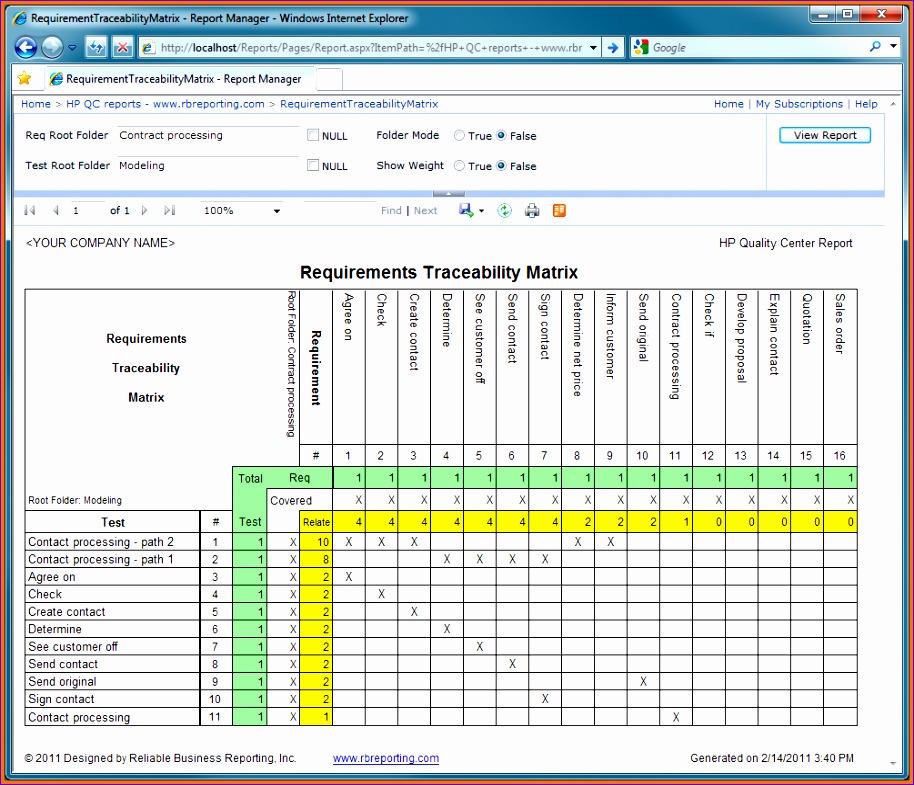
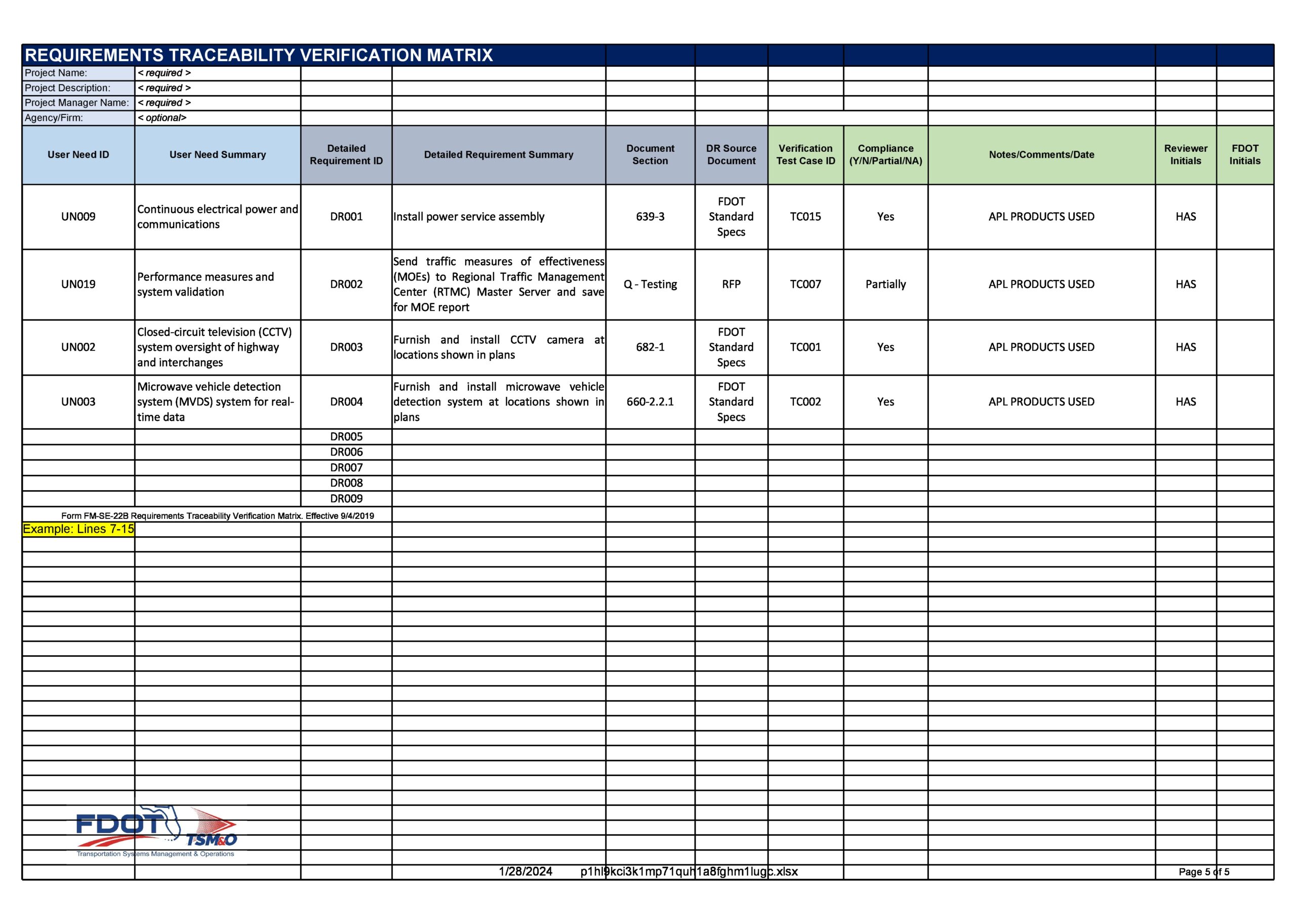
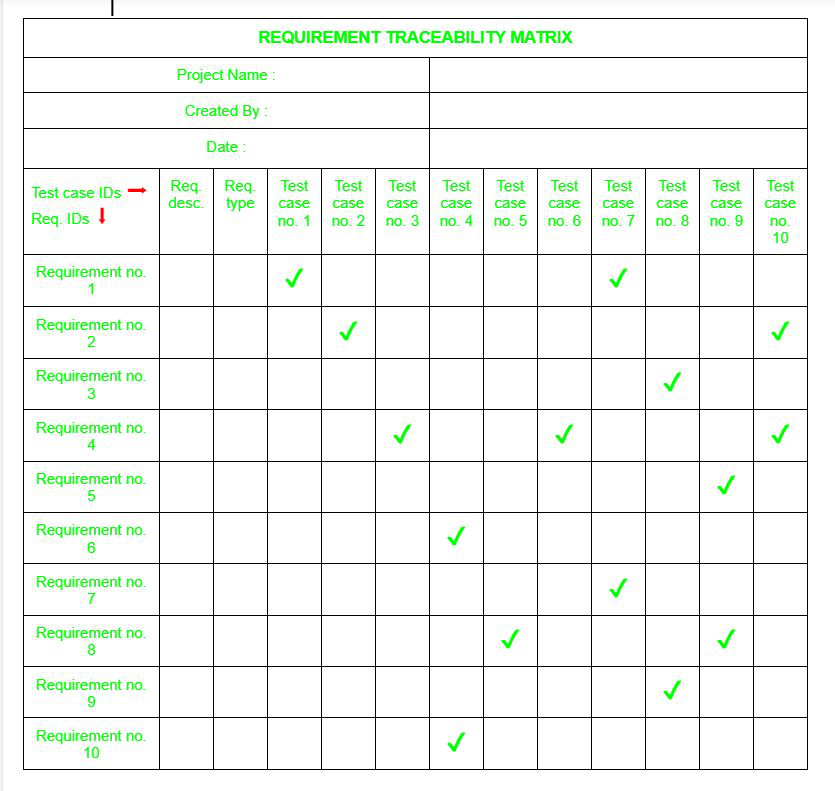
Requirement Traceability Matrix Examples
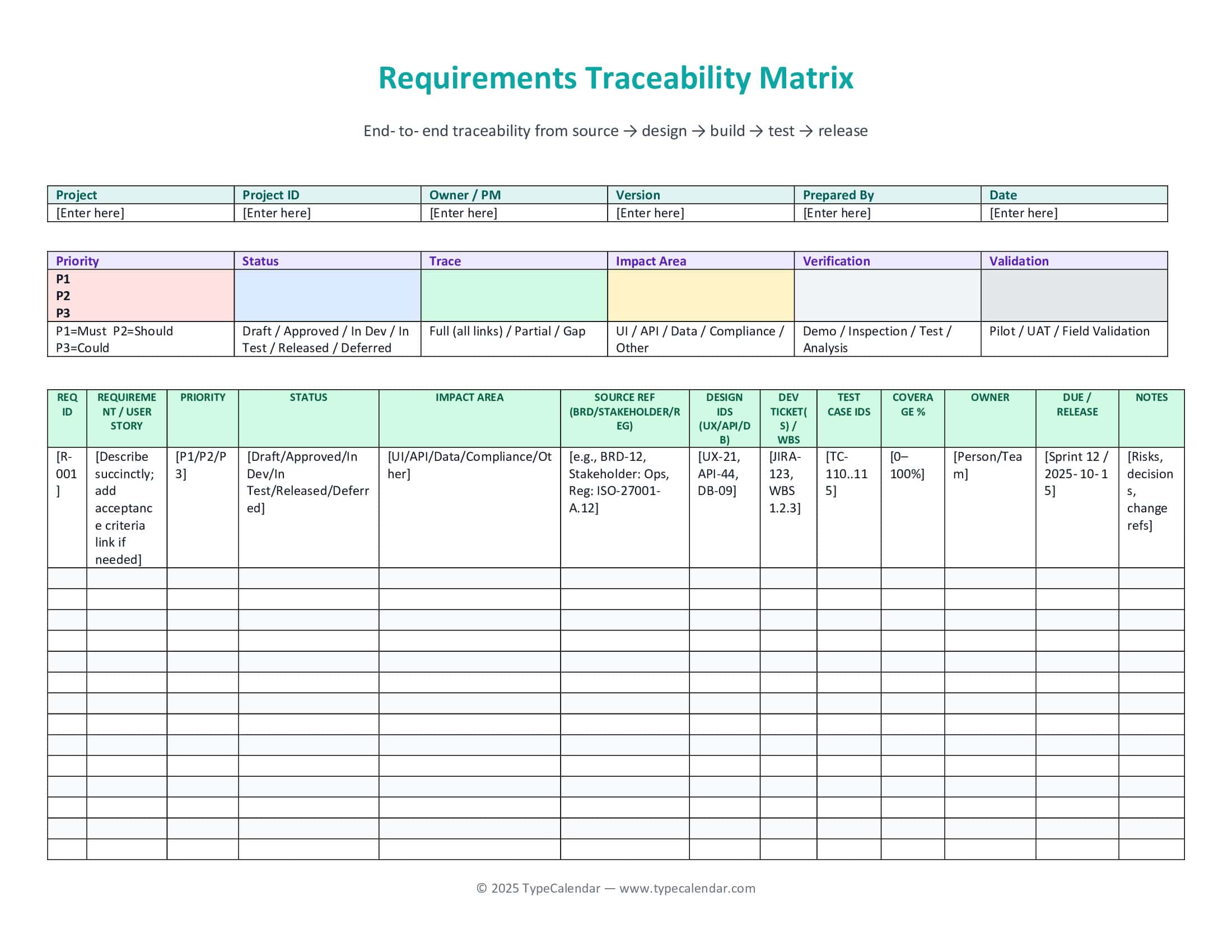
Tips for Completing an RTM
Here are some tips for completing a requirement traceability matrix effectively:
Be Thorough
Ensure that all project requirements are captured and properly linked to project artifacts in the RTM. Conduct detailed analysis and documentation of each requirement to ensure that nothing is overlooked or missed. Thoroughness in completing the RTM is essential for maintaining project integrity and ensuring successful project outcomes.
Collaborate with Stakeholders
Involve stakeholders in the process of creating and maintaining the RTM to gather diverse perspectives, clarify requirements, and address any discrepancies. Stakeholder collaboration helps in ensuring that the RTM accurately reflects the project’s objectives and meets the needs of all parties involved. Regular communication and collaboration with stakeholders contribute to the success of the RTM and the project as a whole.
Regularly Update
Keep the RTM up-to-date with any changes in project requirements or artifacts to maintain accuracy and alignment. As the project evolves, new requirements may emerge, existing requirements may change, and project artifacts may be updated. Regularly updating the RTM ensures that it accurately reflects the current status of project requirements and artifacts, allowing for better decision-making and project management.
Use Visualizations
Utilize visualizations such as diagrams, graphs, and charts to represent the relationships between requirements and project artifacts in the RTM. Visual aids help in conveying complex information in a clear and concise manner, making it easier for stakeholders to understand and analyze the traceability links. Visualizations enhance the usability and effectiveness of the RTM in tracking requirements and project progress.
Seek Feedback
Solicit feedback from stakeholders on the completeness and accuracy of the RTM to ensure that all requirements are properly addressed and implemented. Feedback from stakeholders helps in validating the traceability links, identifying any gaps or discrepancies, and making necessary adjustments. By seeking feedback, project managers can ensure that the RTM reflects the project’s objectives and meets stakeholder expectations.
Document Changes
Document any changes or updates made to the RTM to maintain a transparent and auditable record of project requirements and artifacts. Keep a log of changes, revisions, and approvals to track the evolution of the RTM throughout the project lifecycle. Documenting changes helps in ensuring accountability, maintaining traceability, and facilitating future audits or reviews of the RTM.
By following these tips and best practices, project managers can effectively complete a requirement traceability matrix that enhances project success, improves communication among stakeholders, and ensures the quality and completeness of project deliverables.
Requirement Traceability Matrix Template – Download
