A History Binder Cover is a simple way to organize and personalize a binder for history class. Whether you are studying ancient civilizations, American history, world history, geography, wars, government, or important historical events, a printable history cover can make your school materials easier to identify and organize.
A well-designed history binder cover can also give your school supplies a distinctive academic look. Designs featuring maps, books, globes, historical buildings, documents, scrolls, clocks, and other history-inspired elements can make the connection to the subject immediately clear.
If you are looking for a clean and attractive history binder cover template, a printable design is an easy option. You can print it on standard US Letter paper and place it inside the clear front sleeve of a three-ring binder.
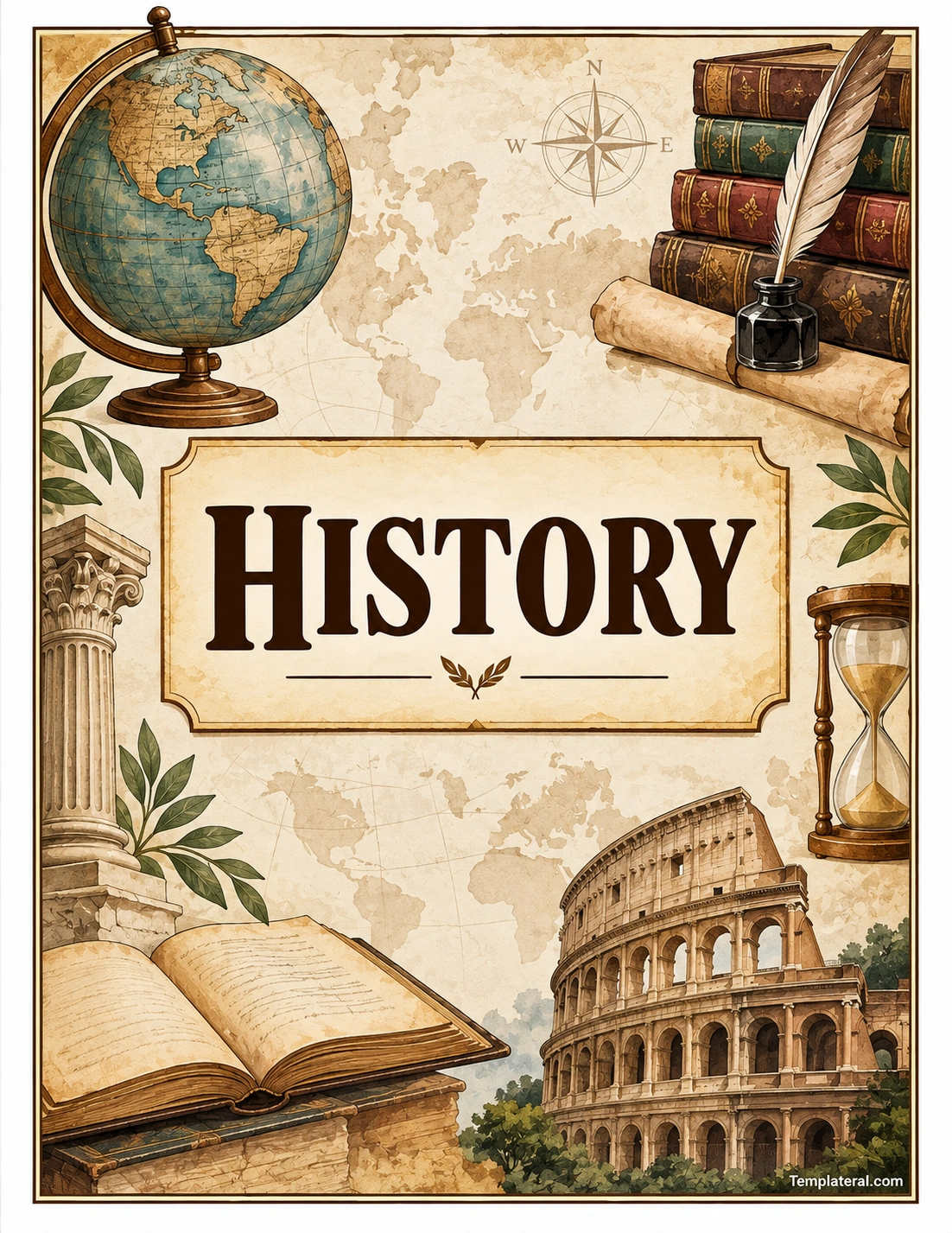
What Is a History Binder Cover?
A history binder cover is a printable page designed to identify and decorate a binder used for history class. It usually includes a prominent history-related title along with visual elements connected to the study of the past.
A printable history cover can be used for class notes, homework, worksheets, research projects, timelines, study guides, and other educational materials. Because the cover is placed inside the binder sleeve, you can replace it whenever you want to change the appearance of your binder.
A dedicated history binder can also make it easier to keep materials for one subject together throughout the school year.
Common materials that can be stored in a history binder include:
- History class notes
- Homework and assignments
- Historical timelines
- Research notes
- Maps and worksheets
- Study guides
- Quizzes and test reviews
- History projects
Why Use a History Binder Cover?
A binder cover is a small organizational detail that can make school materials easier to recognize. When you have several binders for different subjects, a clear history label helps you find the right one quickly.
Identify Your History Binder Easily
A large “History” title makes the subject immediately recognizable. This is especially helpful when several binders have similar colors or designs.
Keep History Materials Organized
A dedicated binder gives you one place for notes, assignments, maps, timelines, and study materials. Adding a clear cover creates a simple visual system for your history resources.
Create a More Interesting School Binder
History offers many visual themes. Maps, globes, ancient architecture, books, manuscripts, compasses, historical documents, and clocks can all be incorporated into a professional binder cover.
History Binder Cover Design Ideas
There are many ways to create a history-themed binder cover. You can select a design based on the topics you study or simply choose a style that matches your personality.
Vintage History Binder Cover
A vintage-inspired design can use parchment tones, sepia details, antique maps, old books, and classical illustrations. This style works particularly well for students who enjoy a traditional academic appearance.
World History Binder Cover
A world history design can feature a globe, world map, compass, famous landmarks, or symbols representing different regions. This approach is useful when your course covers multiple civilizations and historical periods.
American History Binder Cover
Students studying American history can choose designs inspired by historical documents, maps, national landmarks, early settlements, or important periods in U.S. history.
Ancient History Binder Cover
An ancient history theme can include classical columns, ancient architecture, scrolls, pottery-inspired patterns, maps, or archaeological motifs. These elements can create a strong connection to early civilizations.
Historical Map Design
Maps are closely connected to the study of history because borders, migration, exploration, trade, and territorial changes have shaped many historical events. A map-inspired cover can therefore be both attractive and relevant.
What to Include on a History Binder Cover
A good binder cover does not need to contain excessive information. Keeping the design simple makes the main subject title easy to read.
Useful information to include can be:
- Subject: Use “History” as the main title.
- Name: Leave space for the student’s name.
- Class: Add the class period or section.
- Teacher: Include the teacher’s name if needed.
- Grade: Add the grade level when useful.
A blank area is particularly useful because students can write their information by hand after printing the cover.
How to Use a Printable History Binder Cover
Using a printable history binder cover is straightforward. After selecting your preferred design, print the page and place it inside the front sleeve of your binder.
For a standard school binder, use US Letter paper measuring 8.5 x 11 inches. Before printing, check the page size and printer settings to make sure the design fits correctly.
After printing, add your name, class period, or other information if the design includes a blank area. Then place the completed cover into the transparent front pocket of the binder.
Tips for Printing a History Binder Cover
Good printing settings can help preserve the details of your history cover and give it a professional appearance.
- Use US Letter paper: Choose 8.5 x 11 inch paper for a standard printable binder cover.
- Check the orientation: Use portrait orientation when the design is vertical.
- Review the print preview: Make sure borders and important illustrations will not be cropped.
- Choose quality paper: A slightly heavier paper can make the cover more durable.
- Check the scale: Make sure the printer does not enlarge or shrink the design unexpectedly.
- Keep the printed page flat: Place it directly inside the binder sleeve after printing.
How to Personalize Your History Binder Cover
A history binder cover template can be personalized without changing the overall design. A few simple details can make the cover more practical for school use.
Add Your Name
Adding your name makes it easy to identify your binder. This is especially useful when several students use similar binders.
Add Your Class Period
Including the class period or section can help you quickly distinguish your history binder from materials for other classes.
Add a Historical Topic
If your binder focuses on a specific unit, you can add a topic such as “World War II,” “Ancient Civilizations,” “American Revolution,” “Medieval History,” or “U.S. Government.”
How to Organize a History Binder
A good history binder cover works best when the materials inside the binder are organized into clear sections. This makes notes and study materials easier to find throughout the school year.
Class Notes
Keep daily notes, important dates, historical terms, and lesson summaries together. This section can become your primary reference when reviewing class material.
Homework and Assignments
Use a separate section for current and completed assignments. Keeping homework away from long-term reference materials can make it easier to find unfinished work.
Maps and Timelines
Store maps, chronological charts, and timelines together. These materials can be especially helpful when studying relationships between historical events.
Research Materials
Keep research notes, source information, project outlines, and printed references in their own section. This can help prevent research materials from becoming mixed with everyday class notes.
Tests and Study Guides
Keep review sheets, quizzes, practice questions, and completed tests together. Reviewing previous mistakes can help you prepare more effectively for future assessments.
History Binder Cover Ideas for Different Students
Different students may prefer different styles of history binder covers. Younger students may enjoy colorful designs featuring maps, landmarks, and historical objects. Older students may prefer a more minimal or vintage academic style.
Students studying world history can choose a globe or world map design. Those studying American history might prefer a historical document or landmark theme. Students focused on ancient civilizations can choose designs inspired by classical architecture, archaeological discoveries, or ancient maps.
Teachers can also use history binder covers for lesson plans, classroom resources, worksheets, assessment materials, and curriculum documents.
History Binder Cover Ideas for School Organization
Using different covers for different subjects can create a simple visual organization system. For example, you might use a history cover for social studies, another design for science, and separate covers for mathematics and language arts.
You can also coordinate your binder dividers with the subject cover. For history, useful divider categories might include Ancient History, Medieval History, Modern History, American History, World History, Geography, and Current Unit.
This approach can make it easier to find specific materials without searching through every page in the binder.
Frequently Asked Questions About History Binder Covers
What is a History Binder Cover?
A History Binder Cover is a printable page used to identify and decorate a binder containing history notes, assignments, worksheets, maps, timelines, research materials, and study guides.
What size should a history binder cover be?
A standard printable history binder cover is generally designed for US Letter paper, which measures 8.5 x 11 inches. This is a common paper size for school binders in the United States.
Can I personalize a History Binder Cover?
Yes. You can add your name, class period, teacher’s name, grade level, or the specific history unit you are studying. Personal information can be handwritten or added digitally before printing.
What should I put on a history binder cover?
The main title should clearly identify the subject as “History.” You can also add your name, class information, and history-related illustrations such as maps, books, globes, landmarks, documents, or historical objects.
Can high school students use a History Binder Cover?
Yes. A history binder cover can be used by middle school students, high school students, college students, homeschoolers, and anyone organizing history or social studies materials.
Can teachers use a History Binder Cover?
Yes. Teachers can use printable history covers for lesson plans, classroom materials, worksheets, tests, research resources, and curriculum binders.
How can I organize a history binder?
Divide the binder into sections for class notes, homework, maps, timelines, research materials, study guides, and tests. Labeled dividers can make each section easier to locate.
Conclusion
A History Binder Cover is a simple way to make a school binder more organized, recognizable, and visually appealing. A design featuring maps, globes, books, historical landmarks, manuscripts, or other educational elements can immediately communicate the subject while maintaining a professional appearance.
Whether you are studying world history, American history, ancient civilizations, or another social studies course, a printable history cover can be a useful addition to your binder. Choose a design that fits your style, add your personal information, print it on US Letter paper, and place it inside the binder’s front sleeve.
With a clear cover and well-organized sections inside, your history binder can become a practical resource for keeping notes, assignments, timelines, maps, research, and study materials together throughout the school year.
Download: History Binder Cover Template
