An Anatomy And Physiology Binder Cover is a practical way to organize notes, worksheets, diagrams, lab materials, and study resources for anatomy and physiology classes. A well-designed cover makes your binder easy to identify while adding a clean and professional look to your school supplies.
Anatomy and physiology courses often involve a large amount of information, from the skeletal and muscular systems to the cardiovascular, nervous, and respiratory systems. Keeping these materials organized can make studying easier and help you quickly find the notes or worksheets you need.
A printable anatomy and physiology binder cover gives students a simple starting point for creating an organized study binder. You can use a ready-made design, add your name and class information, and print the cover on standard US Letter paper.
What Is an Anatomy And Physiology Binder Cover?
An Anatomy And Physiology Binder Cover is a printable page designed to identify a binder used for anatomy and physiology coursework. It can be placed inside the clear front pocket of a three-ring binder and customized with a student’s name, class, instructor, or school year.
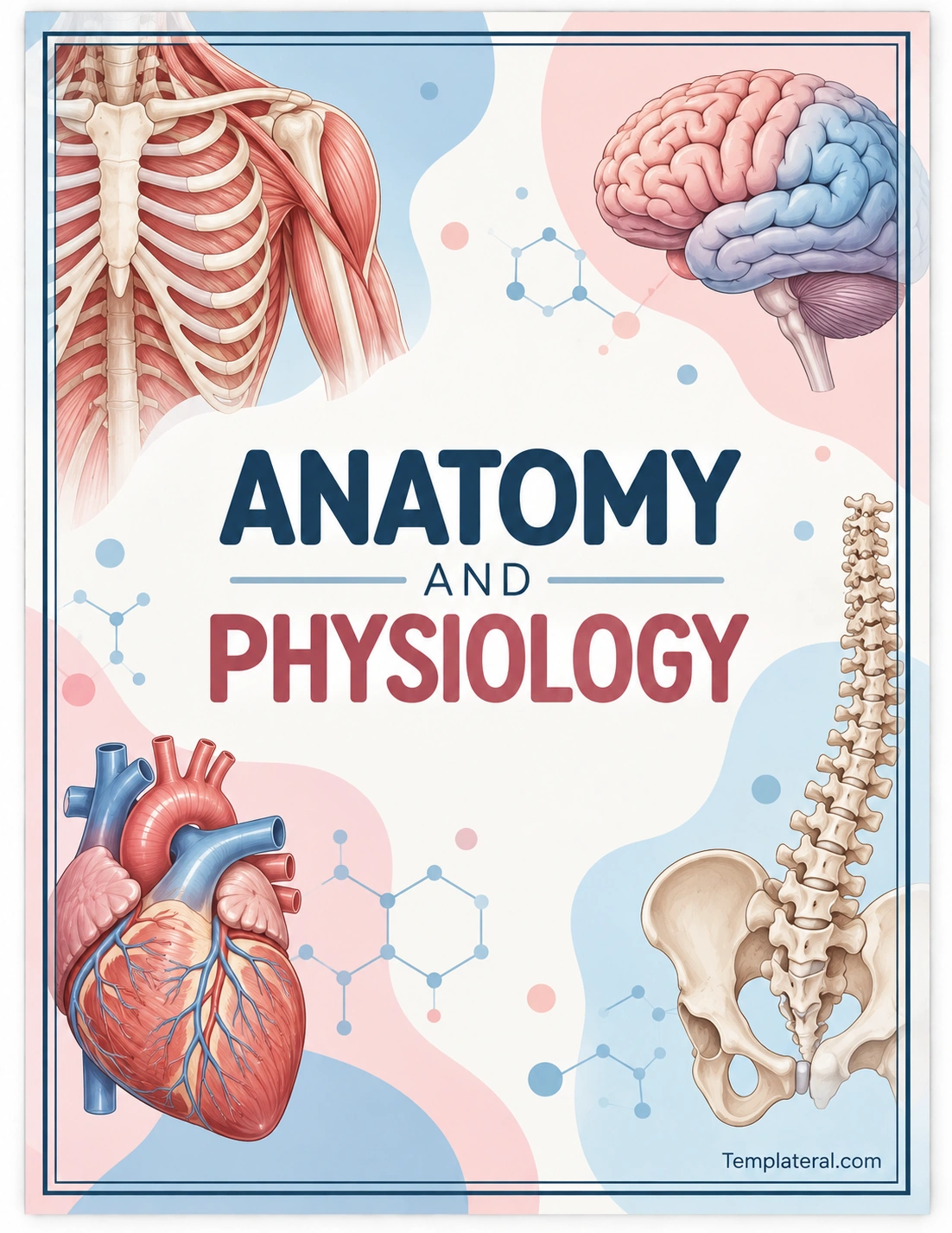
Because anatomy and physiology focus on the structure and function of the human body, the cover can include relevant educational illustrations. Common visual elements include the human skeleton, brain, heart, muscles, organs, anatomical diagrams, and other science-related details.
The design can be colorful and creative or simple and academic. The most important goal is to make the binder immediately recognizable while keeping the information easy to read.
Why Use an Anatomy And Physiology Binder Cover?
Anatomy and physiology classes can generate a considerable amount of study material. A dedicated binder with a clear cover can make it easier to keep everything together and distinguish the subject from other courses.
- Improves organization: Keep anatomy and physiology notes and materials in one clearly identified binder.
- Makes the subject easy to recognize: A prominent title helps you find the correct binder quickly.
- Adds a professional appearance: A clean cover can make ordinary school supplies look more organized.
- Personalizes your binder: Add your name, class, semester, or other information.
- Supports a study system: Use the cover together with labeled dividers for different body systems.
- Easy to replace: A printable cover can be changed whenever your class, semester, or organizational system changes.
Anatomy And Physiology Binder Cover Design Ideas
The right design can make an anatomy and physiology binder both attractive and functional. Scientific illustrations are useful because they immediately communicate the purpose of the binder.
Human Anatomy Theme
A human anatomy theme can feature illustrations of the heart, brain, skeleton, muscles, or other major structures of the human body. This type of design works particularly well for students who want a cover that clearly reflects the subject.
For a balanced layout, place anatomical illustrations around the edges while keeping the center relatively open for the main title and student information.
Human Body Systems Theme
A body systems themed binder cover can highlight several systems, such as the skeletal, muscular, nervous, respiratory, digestive, or cardiovascular systems. Small illustrations can be used as decorative accents without overcrowding the page.
This approach is useful when the binder contains notes covering multiple units rather than focusing on a single body system.
Medical and Academic Theme
A more academic design can use anatomical diagrams, subtle scientific patterns, clean borders, and a limited color palette. Navy, blue, teal, soft red, pink, and neutral tones can create a professional educational appearance.
This style can be especially suitable for students studying nursing, allied health, biology, medicine, or other health-related subjects.
Minimalist Anatomy Binder Cover
A minimalist anatomy binder cover uses fewer illustrations and focuses on typography and white space. A small anatomical drawing combined with a large subject title can create a clean and modern result.
Minimalist designs are also practical when you plan to print the cover at home because they can use less ink than heavily illustrated layouts.
What to Put on an Anatomy and Physiology Binder Cover
The subject title should be the most noticeable element on the cover. Additional information can be included to help identify the binder without making the design too crowded.
- Anatomy and Physiology
- Student name
- Course name or number
- Instructor name
- Class period
- School or college name
- Semester or school year
- Optional study-related phrase
If the binder is used for several semesters, you may want to include only information that will remain relevant. This makes the cover easier to reuse.
How to Make an Anatomy And Physiology Binder Cover
Creating an anatomy and physiology binder cover is simple when you start with a printable template. You can customize the design before printing and then place it inside your binder’s front pocket.
1. Choose a Suitable Template
Select a design that matches your preferred style. A medical or anatomy-themed template can include body structures, organs, bones, muscles, or other educational illustrations.
Make sure the design has enough open space for the title and any personal information you want to add.
2. Add Your Personal Information
Enter your name, course, instructor, semester, or other details. Keep secondary information smaller than the main title so the purpose of the binder remains immediately clear.
3. Check the Paper Size
Many printable binder covers use standard US Letter dimensions of 8.5 by 11 inches. Check the template dimensions before printing and make sure your binder has a compatible front pocket.
4. Review the Print Settings
Check the page orientation, paper size, margins, and scaling options in your printer settings. Use the print preview to make sure the design fits correctly on the page.
5. Insert the Finished Cover
Once printed, place the page inside the transparent front pocket of the binder. Adjust the page so the title and artwork are centered and clearly visible.
How to Organize an Anatomy and Physiology Binder
A good binder cover provides identification, but the inside organization is equally important. Anatomy and physiology involve many interconnected topics, so dividing your materials into clear sections can make studying much easier.
Anatomy Notes
Keep lecture notes, terminology, and anatomical diagrams in a dedicated section. Organize the pages by chapter, unit, or body system so you can quickly find specific information.
Physiology Notes
Physiology focuses on how body structures function. Keep related notes together and consider using separate sections for processes, mechanisms, and key concepts.
Body Systems
Use dividers to separate major systems such as the skeletal, muscular, nervous, cardiovascular, respiratory, digestive, endocrine, and urinary systems.
Lab Materials
If your course includes laboratory activities, create a separate section for lab instructions, observations, worksheets, diagrams, and reports. Keeping these documents together can make them easier to review.
Study Materials
Keep flashcards, review sheets, practice questions, vocabulary lists, and exam preparation materials in a dedicated study section. This can become a useful reference when preparing for tests.
Tips for Choosing a Printable Anatomy Binder Cover
Before choosing an anatomy binder cover, consider both its appearance and its practical use. A good template should look attractive without making the title or personal information difficult to read.
- Choose a readable title: Make sure “Anatomy and Physiology” is clearly visible.
- Use relevant illustrations: Select anatomical graphics that match the subject.
- Leave enough white space: Avoid designs that are so busy that they distract from the title.
- Choose complementary colors: Blue, red, pink, teal, and neutral tones can create an appropriate academic theme.
- Check the page dimensions: Make sure the template matches your binder and printer.
- Consider ink usage: A design with a light background can be more economical to print.
- Prioritize durability: If you use the binder frequently, consider printing on slightly heavier paper.
- Keep information current: Update the semester, course, or instructor details when necessary.
Anatomy And Physiology Binder Cover for Different Students
An anatomy and physiology binder cover can be useful for students at different stages of their education. The design can be adapted to fit the course and level of study.
High School Students
High school students may prefer a colorful anatomy binder cover with clear illustrations of the human body. Including the student’s name and class period can make the binder easy to identify.
College Students
College students may prefer a more sophisticated layout with anatomical illustrations, clean typography, and a limited color palette. A simple academic design can work well for extensive lecture notes and study materials.
Nursing and Allied Health Students
Students preparing for healthcare-related careers can use an anatomy and physiology binder to organize foundational material about body structures and functions. A professional medical-themed cover can help distinguish these materials from other course binders.
Homeschool Students
A printable anatomy binder cover can also be useful for homeschool science units. Parents and students can create a customized cover and organize worksheets, diagrams, experiments, and study notes in the same binder.
Benefits of Using a Printable Anatomy And Physiology Binder Cover
A printable binder cover offers flexibility without requiring a specialized binder. You can use an ordinary three-ring binder and give it a personalized appearance with a single printed page.
Printable designs are also easy to replace. If you start a new semester, change instructors, or reorganize your study materials, you can print a new cover rather than purchasing another binder.
Using a coordinated set of printable covers can also make multiple subject binders easier to recognize. For example, anatomy and physiology can have a medical-themed design while chemistry, biology, and microbiology use their own distinct covers.
Frequently Asked Questions About Anatomy And Physiology Binder Covers
What is an Anatomy And Physiology Binder Cover?
An Anatomy And Physiology Binder Cover is a printable page designed to identify a binder containing anatomy and physiology notes, worksheets, diagrams, laboratory materials, and study resources.
What should I put on an anatomy and physiology binder cover?
You can include the subject title, your name, course name, instructor, class period, school, or semester. The subject title should remain the most prominent information on the page.
What size should an anatomy binder cover be?
Many printable anatomy binder covers are designed for standard US Letter paper, which measures 8.5 by 11 inches. Always check the dimensions of your binder’s front pocket before printing.
Can I use an anatomy and physiology cover for college?
Yes. A printable anatomy and physiology cover can be used for college courses, including nursing, biology, health science, and other programs that require anatomy and physiology coursework.
What images are suitable for an anatomy binder cover?
Suitable educational themes include the human skeleton, brain, heart, muscles, organs, spine, body systems, anatomical diagrams, and other science-related illustrations.
Can I print an anatomy and physiology binder cover at home?
Yes. A printable anatomy and physiology binder cover can usually be printed with a standard home printer. Check the paper size, orientation, margins, and scaling settings before printing.
How should I organize an anatomy and physiology binder?
Consider using dividers for lecture notes, physiology concepts, body systems, laboratory materials, assignments, and study resources. Organizing sections by body system or course unit can make review easier.
Conclusion
An Anatomy And Physiology Binder Cover is a simple way to personalize your binder while making anatomy and physiology materials easier to organize. A clear subject title and relevant anatomical illustrations can help you quickly identify the binder and create a more structured study system.
Whether you are a high school student, college student, nursing student, or homeschool learner, a printable anatomy binder cover can be adapted to your needs. Choose a clean design, add the information you need, print it on the correct paper size, and organize the inside with labeled sections.
With a practical Anatomy And Physiology Binder Cover Template, your notes, diagrams, assignments, laboratory materials, and study resources can stay organized throughout the school year.
Download: Anatomy And Physiology Binder Cover Template
