An automotive bill of sale form is a useful document for recording the details of a vehicle transaction between a seller and a buyer. It creates a written record of the vehicle being sold, the parties involved, the agreed purchase price, the date of sale, and other important transaction details.
Whether you are selling a used car privately, purchasing a vehicle from another individual, or simply want a clear record of a transaction, an automotive bill of sale can help both parties document what was agreed upon. However, requirements can vary by state, so the form should be used together with any title, registration, disclosure, or other documents required by the appropriate motor vehicle authority.
A well-organized bill of sale is simple to complete when you know which information to include. This guide explains the purpose of an automotive bill of sale form, what information it should contain, how to complete it, and practical tips for keeping a useful record of a vehicle sale.
What Is an Automotive Bill of Sale Form?
An automotive bill of sale form is a written record used to document the sale or transfer of a vehicle from one person to another. It typically identifies the vehicle, seller, buyer, purchase price, transaction date, and signatures of the parties involved.
The document provides both sides with a record of the transaction. For example, the seller can keep a copy showing when the vehicle was sold and to whom, while the buyer can retain a copy documenting the terms of the purchase.
A bill of sale does not necessarily replace a vehicle title or other documents required to transfer ownership. The exact requirements depend on the jurisdiction and circumstances of the transaction.
Why Use an Automotive Bill of Sale?
Private vehicle transactions can involve many details, and relying only on a verbal agreement can make those details difficult to verify later. A written automotive bill of sale creates a clear record that both parties can review.
Common reasons to use one include:
- Documenting the agreed purchase price.
- Recording the date of the vehicle transaction.
- Identifying the vehicle being sold.
- Recording the names and contact information of the buyer and seller.
- Providing a written record of agreed terms.
- Keeping documentation for personal records.
- Helping organize paperwork related to a private vehicle sale.
Both the buyer and seller should generally keep a completed copy of the signed document with their other transaction records.
What Information Should an Automotive Bill of Sale Include?
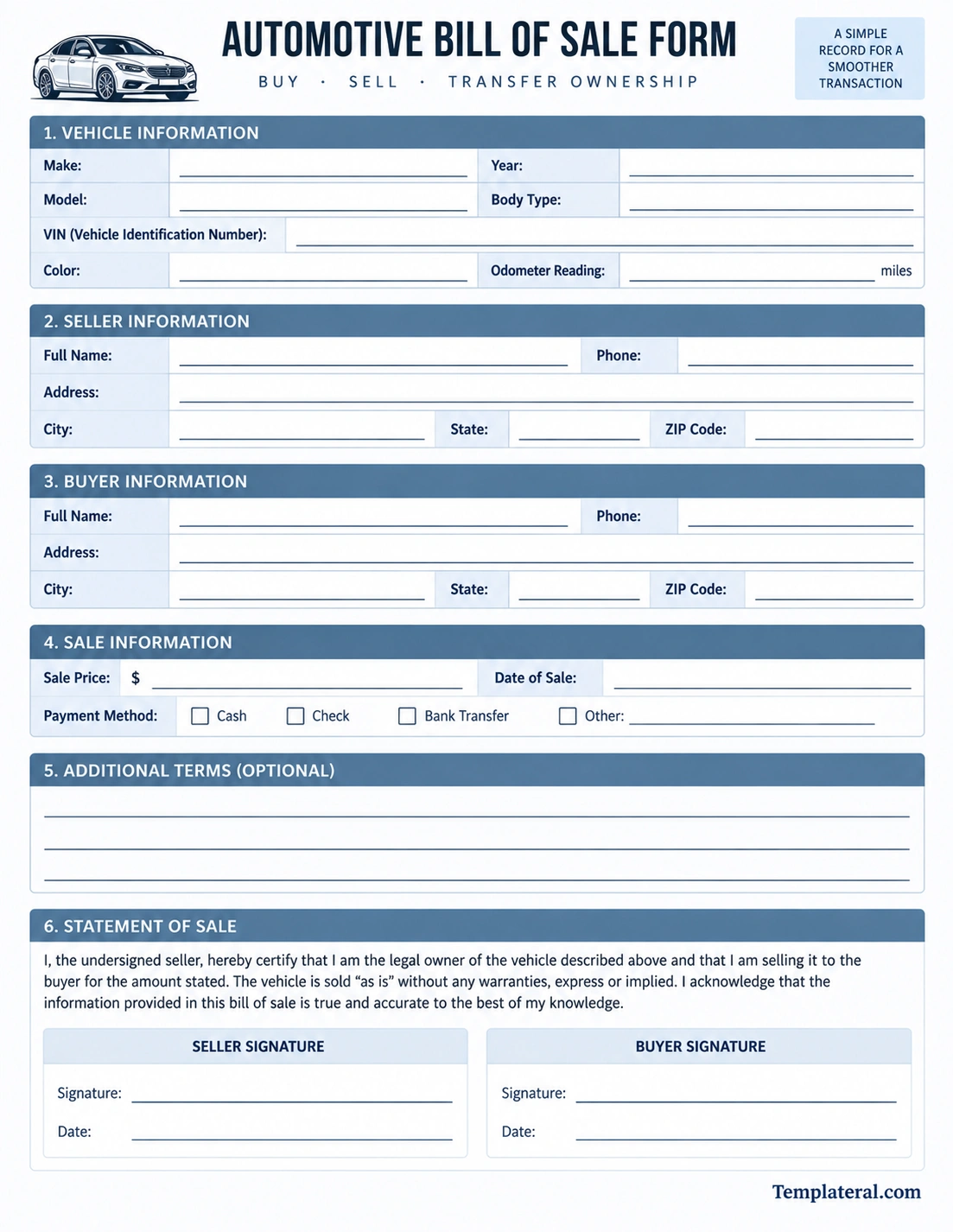
A useful automotive bill of sale form should contain enough information to clearly identify the vehicle and document the transaction. A simple form can be divided into several sections.
Vehicle Information
The vehicle section identifies the automobile being sold. Important details may include:
- Make
- Model
- Model year
- Vehicle identification number (VIN)
- Body type
- Vehicle color
- Odometer reading
The VIN is particularly important because it provides a unique identifier for the vehicle. It should be entered carefully and checked against the vehicle and relevant ownership documents.
Seller Information
The seller section should identify the person or party selling the vehicle. It commonly includes the seller’s full name, address, city, state, ZIP code, and a phone number or other contact information.
Buyer Information
The buyer section records the person purchasing the vehicle. Similar information can be included, such as the buyer’s full name, address, city, state, ZIP code, and contact information.
Sale Information
The sale section documents the basic financial and timing details of the transaction. It may include the agreed sale price, date of sale, and payment method.
If the transaction includes additional conditions or agreements, those details can be recorded in a separate terms section rather than relying on verbal conversations.
How to Fill Out an Automotive Bill of Sale Form
Completing an automotive bill of sale is straightforward when the information is entered carefully. Both parties should review the document before signing it.
1. Identify the Vehicle
Start by entering the vehicle’s make, model, year, VIN, color, body type, and odometer reading. Compare the information with the vehicle’s existing documents to reduce the chance of errors.
2. Enter the Seller’s Information
Provide the seller’s complete legal name and current contact information. If more than one person is listed as an owner or seller, make sure the appropriate parties are included according to the applicable requirements.
3. Enter the Buyer’s Information
Record the buyer’s full name and contact information. The information should be clear and legible so the completed document can be easily referenced later.
4. Record the Sale Price
Enter the agreed purchase price exactly as understood by both parties. If the transaction involves a specific payment arrangement or another consideration, document the applicable details clearly.
5. Add the Date of Sale
Record the date on which the sale or transaction takes place. The date can be important when organizing ownership and transaction records.
6. Add Additional Terms When Necessary
If there are specific conditions associated with the transaction, include them in the additional terms section. Examples might include information about included accessories, agreed repairs, or other terms that both parties have specifically accepted.
7. Sign and Date the Form
Both parties should review the completed document and sign where required. Each party should receive a copy of the signed bill of sale for their records.
Automotive Bill of Sale vs. Vehicle Title
An automotive bill of sale and a vehicle title serve different purposes. The bill of sale documents the transaction between the buyer and seller, while the title is an official ownership document associated with the vehicle.
In many transactions, the buyer may need both documents or additional paperwork to complete the ownership and registration process. A bill of sale should therefore not automatically be treated as a substitute for a title.
Before completing a private vehicle sale, both parties should check the requirements of the applicable state or local motor vehicle authority to determine which documents are required.
When Should You Use an Automotive Bill of Sale?
An automotive bill of sale can be useful in many private vehicle transactions. Common situations include:
- Selling a used car to another individual.
- Buying a used vehicle from a private seller.
- Selling a truck, SUV, van, or other personal vehicle.
- Documenting a private-party vehicle transaction.
- Creating a written record of an agreed vehicle purchase.
The appropriate documentation can vary depending on the vehicle, transaction type, and jurisdiction, so it is important to verify any local requirements before finalizing the sale.
Tips for Completing a Vehicle Bill of Sale
A few simple practices can make the document easier to use and reduce avoidable mistakes.
- Double-check the VIN: Compare the VIN on the form with the vehicle and ownership documents.
- Use complete names: Avoid unclear abbreviations when identifying the buyer and seller.
- Write clearly: Make sure all handwritten information can be read easily.
- Record the exact sale price: Enter the amount agreed upon by both parties.
- Include the sale date: Do not leave the transaction date blank.
- Review all terms: Both parties should understand any additional conditions before signing.
- Make copies: The buyer and seller should each retain a completed copy.
- Check local requirements: Confirm whether additional forms, disclosures, title documents, or signatures are required.
Common Mistakes to Avoid
A bill of sale is most useful when its information is accurate and complete. Several common mistakes can make the document less useful.
Incorrect Vehicle Information
An incorrect VIN, model year, or vehicle description can create unnecessary confusion. Carefully verify vehicle details before signing.
Missing Purchase Price
Leaving the sale price blank can make the transaction record incomplete. Enter the agreed amount clearly.
Missing Signatures
A form that has not been properly signed may not provide the documentation either party expects. Check the signature section before exchanging copies.
Relying Only on the Bill of Sale
A bill of sale is only one part of a vehicle transaction. Depending on the jurisdiction, the buyer and seller may also need a title, registration documents, odometer disclosure, emissions documentation, or other paperwork.
Using a Printable Automotive Bill of Sale Form
A printable automotive bill of sale form can make a private vehicle transaction easier to organize because the major information fields are already arranged in a logical format.
A good printable form should provide dedicated spaces for vehicle information, seller details, buyer details, sale information, additional terms, and signatures. This structure helps both parties review the transaction before completing it.
Before printing, make sure the document is legible and that all fields provide enough room for the required information. After completing the form, keep the signed copy in a safe place along with other vehicle records.
Digital or Printed Bill of Sale?
Both digital and printed records can be useful. A digital copy can be convenient for storing and sharing, while a printed document can be easier to review and sign during an in-person transaction.
If the form is printed, use a clear print setting and check that all lines, labels, and signature areas are visible. If a digital copy is retained, make sure the completed version is saved securely and can be accessed when needed.
What to Check Before Finalizing a Vehicle Sale
Before the transaction is completed, both parties should review the important details rather than signing immediately.
- Confirm the buyer and seller names.
- Verify the vehicle identification number.
- Check the make, model, and year.
- Confirm the odometer information.
- Review the purchase price.
- Confirm the sale date.
- Review any additional terms.
- Complete the required signatures.
- Make copies of the completed document.
- Verify any additional state or local paperwork requirements.
Final Thoughts
An automotive bill of sale form provides a simple way to create a written record of a private vehicle transaction. By documenting the vehicle information, buyer and seller details, purchase price, sale date, terms, and signatures, the form can help both parties keep their transaction records organized.
For the best results, complete every relevant section carefully, verify the vehicle information, keep a signed copy, and check the requirements that apply in your location. A printable automotive bill of sale template can make this process easier by providing a clear structure for recording the essential details of the sale.
Download: Automotive Bill of Sale Template
