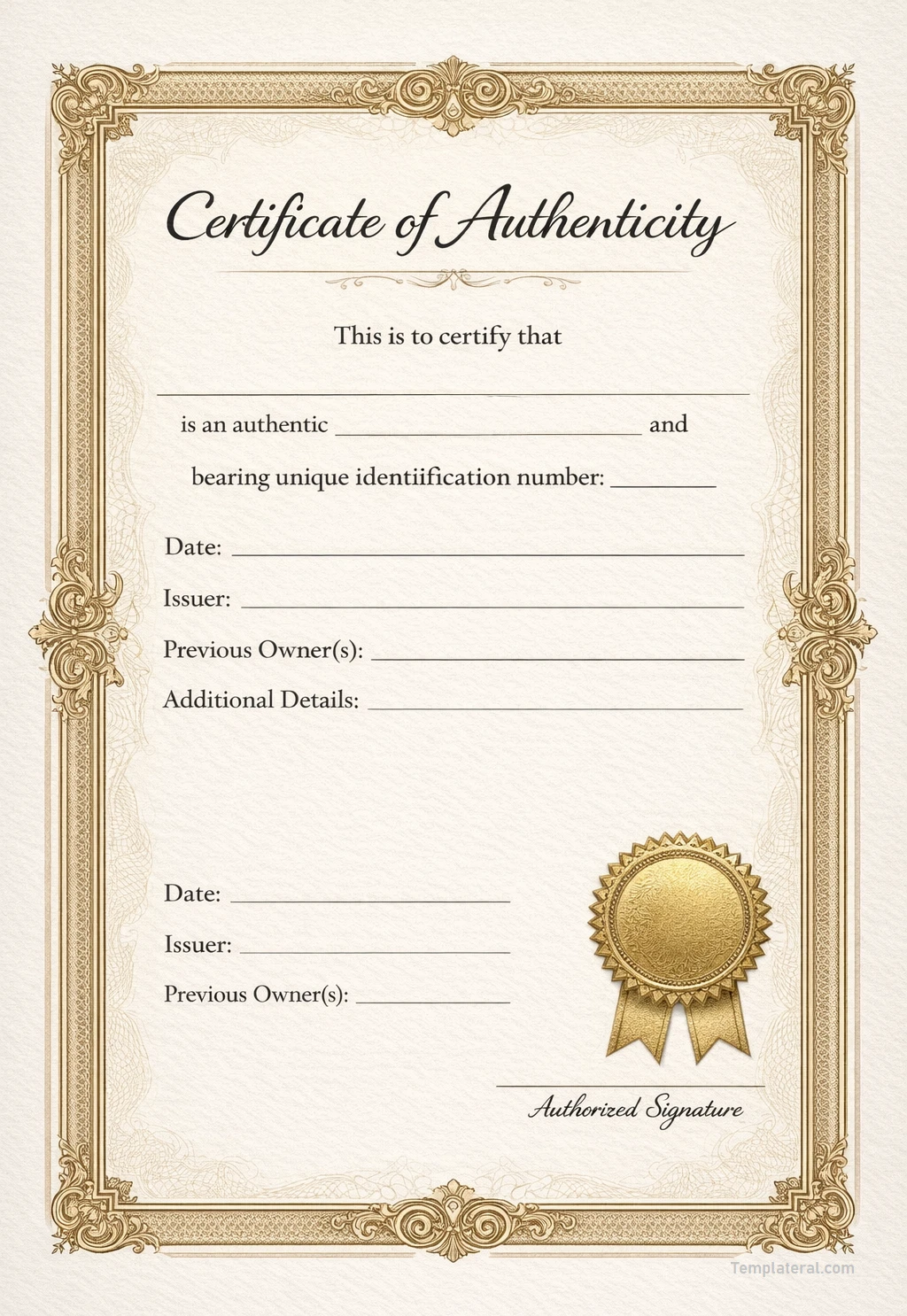
When owning valuable items, whether it’s a piece of artwork, a vintage watch, or a rare collectible, having an authenticity certificate is crucial. A Certificate of Authenticity (COA) serves as proof of ownership and can be used to determine the value of an item for insurance or resale purposes.
These certificates not only confirm the authenticity of an item but can also provide valuable information about its lineage and previous owners, which can be essential for estimating the worth and significance of a possession.
What is an Authenticity Certificate?
An authenticity certificate, also known as a COA, is a document that verifies the authenticity of a valuable item. It is usually issued by an expert or a reputable authority in the field who has examined the item and confirmed its authenticity.
The certificate typically includes details such as the item’s description, provenance, and any unique characteristics that help establish its authenticity.
Why You Need an Authenticity Certificate
There are several reasons why having an authenticity certificate for your valuable items is important:
- Proof of Ownership: A COA serves as legal proof of ownership, which can be useful in case of theft, loss, or disputes over ownership.
- Value Determination: The certificate can help determine the value of an item for insurance purposes or when selling it on the market.
- Provenance Information: It can provide valuable information about the item’s history, previous owners, and any significant events or transactions related to it.
- Authenticity Confirmation: It confirms that the item is genuine and not a counterfeit, which is essential for maintaining its value and integrity.
What to Include in an Authenticity Certificate
When obtaining an authenticity certificate for your valuable items, make sure it includes the following information:
- Description of the Item: Details about the item’s characteristics, materials, dimensions, and any unique features that make it valuable.
- Provenance: Information about the item’s history, previous owners, and how it came into your possession.
- Expert Examination: Confirmation that the item has been examined by a qualified expert who has verified its authenticity.
- Date and Signature: The date when the certificate was issued and the signature of the issuing authority.
How to Obtain an Authenticity Certificate
To obtain an authenticity certificate for your valuable items, follow these steps:
- Research reputable experts or authorities in the field who can issue a valid certificate for your item.
- Contact the expert or authority to inquire about their authentication process and fees.
- Arrange for the item to be examined in person or through detailed photographs and documentation.
- Receive the authenticity certificate once the item has been verified as authentic.
Tips for Maintaining Authenticity Certificates
Once you have obtained authenticity certificates for your valuable items, follow these tips to ensure their safety and validity:
- Keep the certificates in a secure and accessible location, such as a safe deposit box or a fireproof safe.
- Make copies of the certificates and store them in separate locations as a backup.
- Regularly update the certificates with any new information or appraisals to maintain their accuracy.
- Take precautions to prevent the certificates from being damaged, lost, or stolen.
Conclusion
Having an authenticity certificate for your valuable items is essential for proving ownership, determining value, and preserving their authenticity and history.
By following the steps outlined above and maintaining the certificates properly, you can ensure that your valuable possessions retain their worth and significance for years to come.
Authenticity Certificate Template – DOWNLOAD
