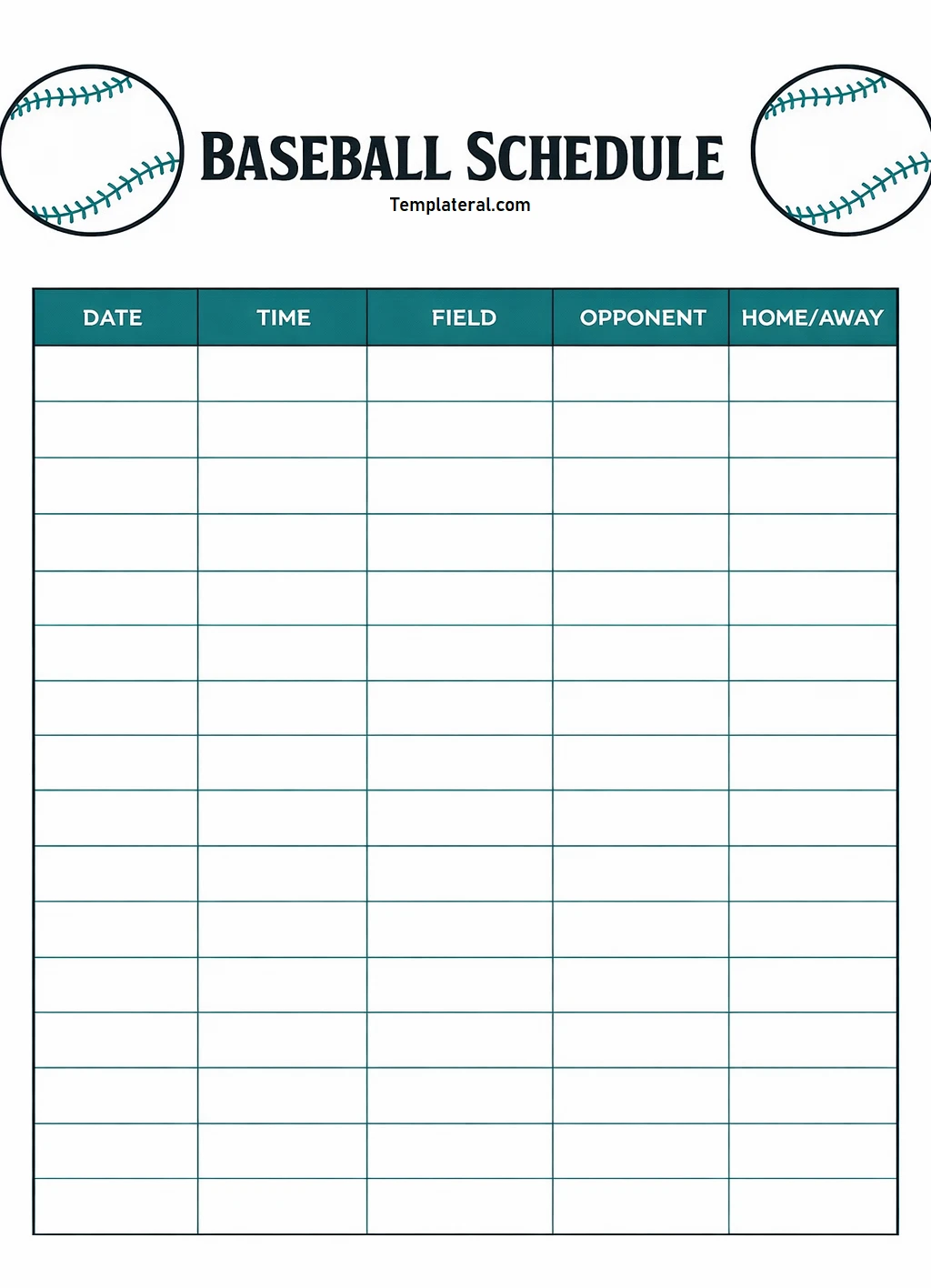
Baseball schedules play a crucial role in the world of sports, particularly in organizing and coordinating games between teams. These schedules ensure fairness and efficiency by creating a structured league, managing travel, and maintaining a consistent flow of play for players, coaches, and fans.
For younger players, schedules also help balance competitive play with personal growth and family commitments, integrating practice, games, and other summer activities into a manageable routine.
What are Baseball Schedules?
Baseball schedules are pre-determined lists of games that teams will play throughout a season. These schedules outline the dates, times, and locations of each game, as well as which teams will be competing against each other.
They are carefully planned out to ensure that teams have a balanced number of home and away games, as well as to minimize travel time between matches.
Why are Baseball Schedules Important?
Baseball schedules are essential for several reasons. Firstly, they help to create a structured league where teams can compete against each other in a fair and organized manner. Schedules also ensure that games are spread out evenly throughout the season, preventing teams from having long stretches of consecutive games or extended breaks between matches.
Additionally, baseball schedules are crucial for managing travel logistics. By planning out the dates and locations of games in advance, teams can make necessary arrangements for transportation and accommodation, reducing the stress and last-minute scrambling that can occur without a set schedule.
Key Elements of Baseball Schedules
When creating a baseball schedule, several key elements need to be considered to ensure its effectiveness:
- Game Dates and Times: Clearly outlining the dates and times of each game is essential for proper planning and coordination.
- Home and Away Games: Balancing the number of home and away games for each team is crucial to ensure fairness throughout the season.
- Travel Logistics: Minimizing travel time between games and coordinating transportation and accommodation for teams is vital for a smooth schedule.
- Player Rest: Building in rest days for players is important to prevent fatigue and injuries during the season.
- Weather Considerations: Taking into account weather conditions and potential rainouts when scheduling games helps to avoid cancellations and rescheduling conflicts.
- Special Events: Incorporating special events, such as tournaments or playoffs, into the schedule adds excitement and competitiveness to the season.
How to Create a Baseball Schedule
Creating a baseball schedule requires careful planning and coordination to ensure its success. Here are some steps to follow when putting together a baseball schedule:
1. Determine the Number of Games:
Start by determining how many games each team will play during the season. This will help you establish the overall length and structure of the schedule.
2. Consider Home and Away Games:
Make sure to balance the number of home and away games for each team to ensure fairness and equal playing opportunities.
3. Coordinate with Other Teams:
Work with other teams in the league to coordinate game dates and times that work for everyone involved. Communication is key to avoid conflicts and scheduling issues.
4. Factor in Travel Time:
Consider the distance between teams and plan game locations accordingly to minimize travel time and expenses for all parties.
5. Allow for Player Rest:
Build in rest days for players to prevent burnout and injuries. Scheduling back-to-back games or long stretches without breaks can have negative effects on player performance.
6. Account for Weather Conditions:
Keep an eye on weather forecasts and have contingency plans in place for potential rainouts or rescheduled games. Flexibility is key to adapting to unexpected changes in the schedule.
7. Incorporate Special Events:
Add excitement to the schedule by including special events like tournaments, playoffs, or rivalry games. These events can generate fan interest and increase competitiveness among teams.
8. Review and Adjust Regularly:
Once the schedule is in place, regularly review and adjust it as needed to accommodate any unforeseen circumstances or changes in team availability. Flexibility and adaptability are essential for a successful baseball season.
Tips for Successful Baseball Schedules
To ensure a successful baseball schedule, consider the following tips:
- Start Early: Begin planning the schedule well in advance to allow time for coordination and adjustments.
- Communicate Clearly: Keep all teams and stakeholders informed of any schedule changes or updates to avoid confusion.
- Be Flexible: Anticipate changes and be prepared to adjust the schedule as needed to accommodate unforeseen circumstances.
- Consider Feedback: Solicit feedback from teams and players to make improvements to the schedule for future seasons.
- Prioritize Fairness: Ensure that the schedule is fair and balanced for all teams, taking into account factors like travel time and rest days.
- Stay Organized: Keep detailed records of the schedule, game results, and any changes to help maintain order throughout the season.
In conclusion, baseball schedules are essential for organizing and coordinating games between teams, ensuring fairness, efficiency, and a consistent flow of play. By carefully planning out game dates, times, and locations, as well as balancing home and away games, managing travel logistics, and incorporating rest days, baseball schedules help create an enjoyable and competitive season for players, coaches, and fans alike.
Baseball Schedule Template – DOWNLOAD
