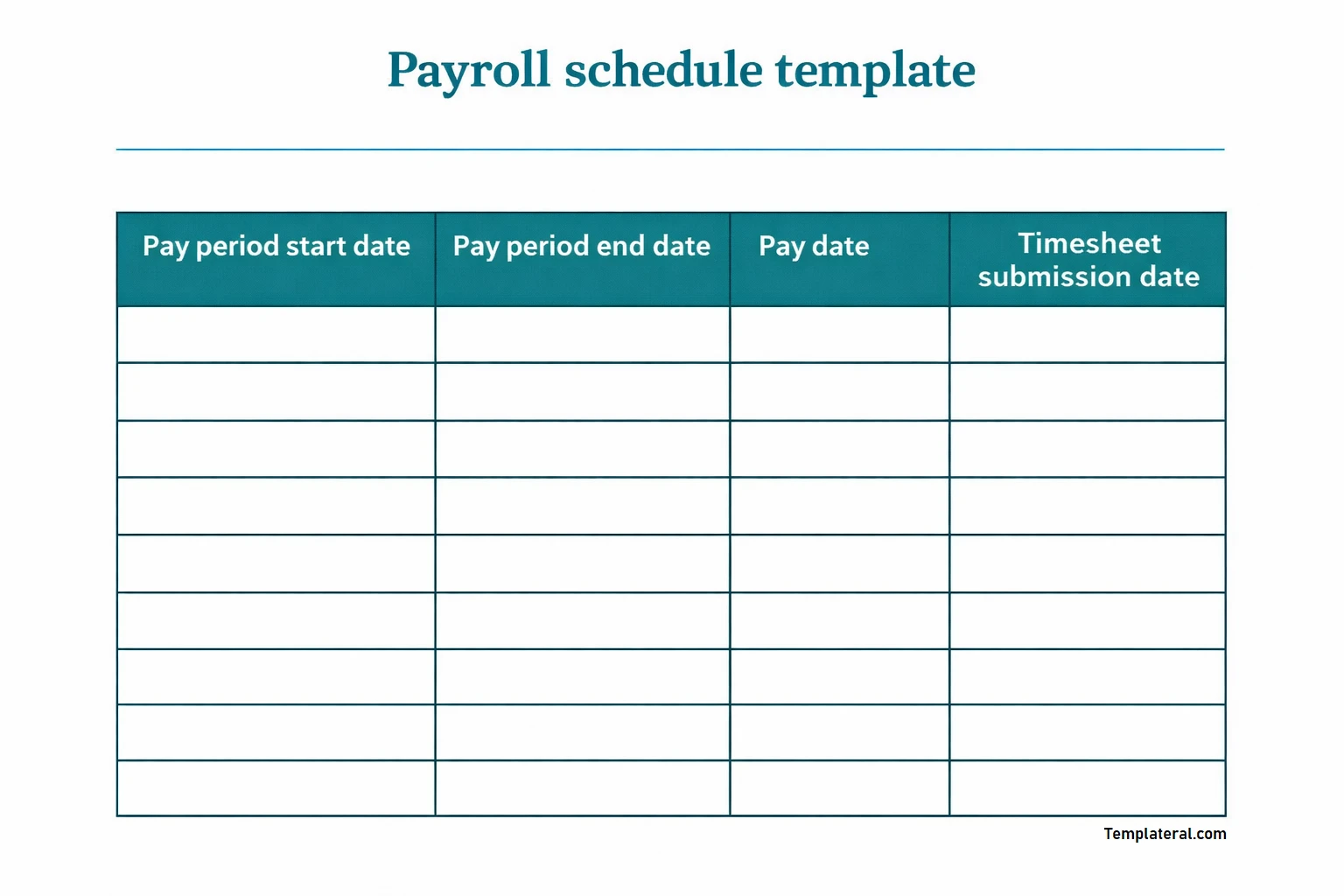
Managing payroll is a crucial task for businesses of all sizes. A payroll schedule defines the regular timeline for paying employees, which helps businesses manage cash flow and ensures timely compensation for their staff.
It also simplifies accounting, ensures compliance with labor laws regarding pay frequency, and allows employees to budget and plan their finances more effectively.
What is a Payroll Schedule?
A payroll schedule is a predetermined timeline that outlines when employees will receive their wages. This schedule typically includes information such as pay periods, pay dates, and any other relevant details related to compensation.
By establishing a clear payroll schedule, businesses can streamline their payroll process and maintain consistency in paying employees.
Why is a Payroll Schedule Important?
A payroll schedule plays a crucial role in the financial management of a business. Here are some key reasons why maintaining a payroll schedule is essential:
- Manage Cash Flow: A consistent payroll schedule helps businesses plan and manage their cash flow effectively, ensuring that they have enough funds to cover employee wages.
- Ensure Timely Compensation: By adhering to a payroll schedule, businesses can ensure that their employees are paid on time, which is essential for maintaining employee satisfaction and morale.
- Simplify Accounting: A defined payroll schedule simplifies the accounting process by providing a clear timeline for recording and tracking payroll expenses.
- Compliance with Labor Laws: Many labor laws specify the frequency at which employees must be paid. By following a payroll schedule, businesses can ensure compliance with these regulations.
- Employee Financial Planning: Having a predictable payroll schedule allows employees to budget and plan their finances more effectively, leading to greater financial stability and peace of mind.
Key Elements of a Payroll Schedule
When creating a payroll schedule, there are several key elements to consider:
- Pay Period: The timeframe over which employee work hours are tracked for payment.
- Pay Dates: The dates on which employees will receive their wages.
- Overtime Policies: Any policies related to overtime pay should be clearly outlined in the schedule.
- Payroll Processing: The process for calculating and distributing employee wages should be clearly defined.
How to Establish a Payroll Schedule
Creating a payroll schedule involves several steps:
- Review Labor Laws: Familiarize yourself with labor laws in your area to ensure compliance with pay frequency requirements.
- Define Pay Periods: Determine the frequency of pay periods, such as weekly, bi-weekly, or monthly.
- Select Pay Dates: Choose specific dates for issuing employee payments, taking into account holidays and business operations.
- Communicate with Employees: Clearly communicate the payroll schedule to employees so they are aware of when they will receive their wages.
Tips for Managing a Payroll Schedule
Here are some tips to help businesses effectively manage their payroll schedule:
- Automate Payroll Processes: Consider using payroll software to streamline payroll processing and reduce errors.
- Stay Organized: Keep detailed records of payroll information to ensure accuracy and compliance.
- Monitor Changes: Regularly review and update the payroll schedule to reflect any changes in employee compensation or labor laws.
- Seek Professional Advice: Consult with a payroll specialist or accountant to ensure that your payroll processes are efficient and compliant.
In Conclusion
A well-defined payroll schedule is essential for businesses to effectively manage their finances, comply with labor laws, and ensure timely compensation for employees. By establishing and maintaining a payroll schedule, businesses can streamline their payroll process, simplify accounting, and improve employee satisfaction.
Payroll Schedule Template – Download
