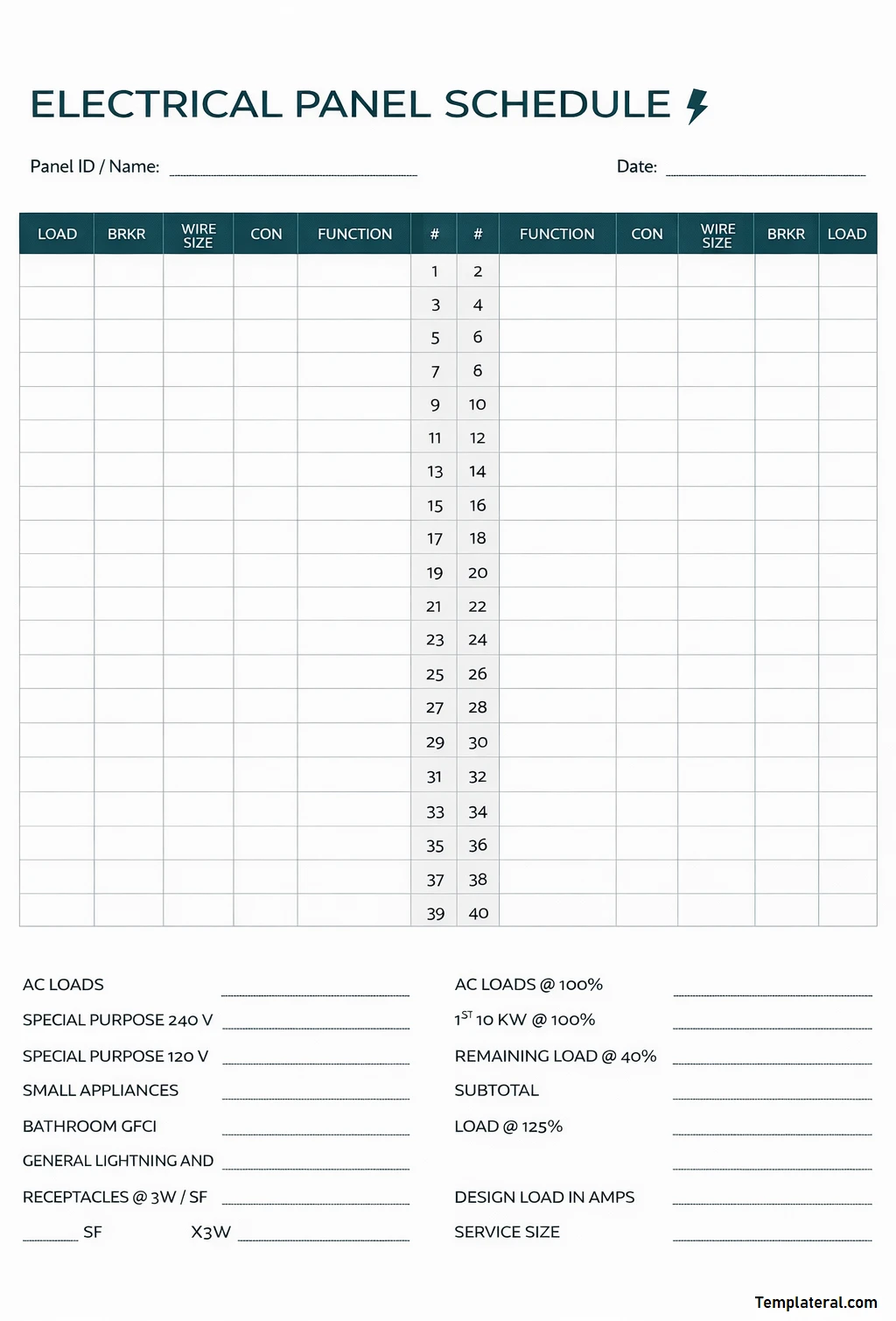
Regarding electrical work, one essential document that plays a crucial role in understanding the electrical layout of a building is the panel schedule. This comprehensive document details the circuits and their corresponding loads within a panelboard, providing a clear and organized record for electricians, contractors, and homeowners.
Panel schedules serve as a roadmap for troubleshooting, maintenance, and future modifications, making them an invaluable tool in the world of electrical systems.
What Is a Panel Schedule in Electrical Work?
A panel schedule, also known as a panel board schedule, is a detailed document that outlines the circuits and loads within a panelboard. It provides vital information about the electrical connections in a building, including the location of each circuit, the type of load it serves, and the corresponding breaker size.
This information is essential for anyone working on the electrical system, as it helps them understand the layout of the circuits and identify any issues that may arise.
What Does a Panel Board Schedule Show?
A panel board schedule typically includes the following information:
- Circuit number: Each circuit is assigned a unique number for identification purposes.
- Load type: This specifies the type of load that the circuit serves, such as lighting, outlets, or appliances.
- Load description: A brief description of the load connected to the circuit.
- Breaker size: The size of the breaker that protects the circuit from overloading.
- Wire size: The gauge of the wire used for the circuit.
Why Panel Schedules Matter in Commercial Electrical Jobs
In commercial electrical jobs, panel schedules are particularly important due to the complexity of the electrical systems involved. With multiple circuits serving various loads in a commercial building, having a detailed panel schedule is crucial for maintenance, troubleshooting, and safety purposes. Electricians and contractors rely on panel schedules to quickly identify the location of circuits and loads, making their work more efficient and effective.
Types of Electrical Panel Schedules
There are several types of electrical panel schedules, including:
- Main panel schedule: This document details the circuits and loads connected to the main electrical panel in a building.
- Subpanel schedule: Subpanels are additional panels connected to the main panel, each with its own schedule outlining the circuits and loads.
- Feeder schedule: This schedule shows the feeder circuits that supply power to subpanels or other electrical equipment.
What Information Is Included in an Electrical Panel Schedule?
An electrical panel schedule typically includes the following information:
- Circuit number: A unique identifier for each circuit.
- Load type: The type of load served by the circuit.
- Load description: A brief description of the load connected to the circuit.
- Breaker size: The size of the breaker protecting the circuit.
- Wire size: The gauge of the wire used for the circuit.
How to Make a Panel Schedule
Creating a panel schedule involves the following steps:
- Identify circuits: Determine the circuits and loads to be included in the schedule.
- Gather information: Collect data on each circuit, including load type, description, breaker size, and wire size.
- Organize the information: Arrange the data clearly and logically for easy reference.
- Create the schedule: Use a template or software to input the information and generate the panel schedule.
- Review and update: Regularly review and update the panel schedule to reflect any changes or additions to the electrical system.
Common Mistakes to Avoid in Panel Scheduling
When creating a panel schedule, it’s important to avoid the following common mistakes:
- Incorrect circuit numbering: Using inconsistent or incorrect circuit numbers can lead to confusion during troubleshooting.
- Inaccurate load descriptions: Failing to provide detailed and accurate load descriptions can make it difficult to identify the purpose of each circuit.
- Missing breaker size information: Omitting the breaker size for each circuit can result in overloading and safety hazards.
- Not updating the schedule: Neglecting to update the panel schedule with any changes or additions to the electrical system can render it outdated and unreliable.
By understanding the importance of panel schedules in electrical systems, knowing what information they contain, and recognizing common mistakes to avoid, individuals can ensure that their electrical work is efficient, safe, and well-documented. Panel schedules serve as a vital tool in maintaining and troubleshooting electrical systems, making them an essential component of any building’s infrastructure.
Panel Schedule Template – Download
