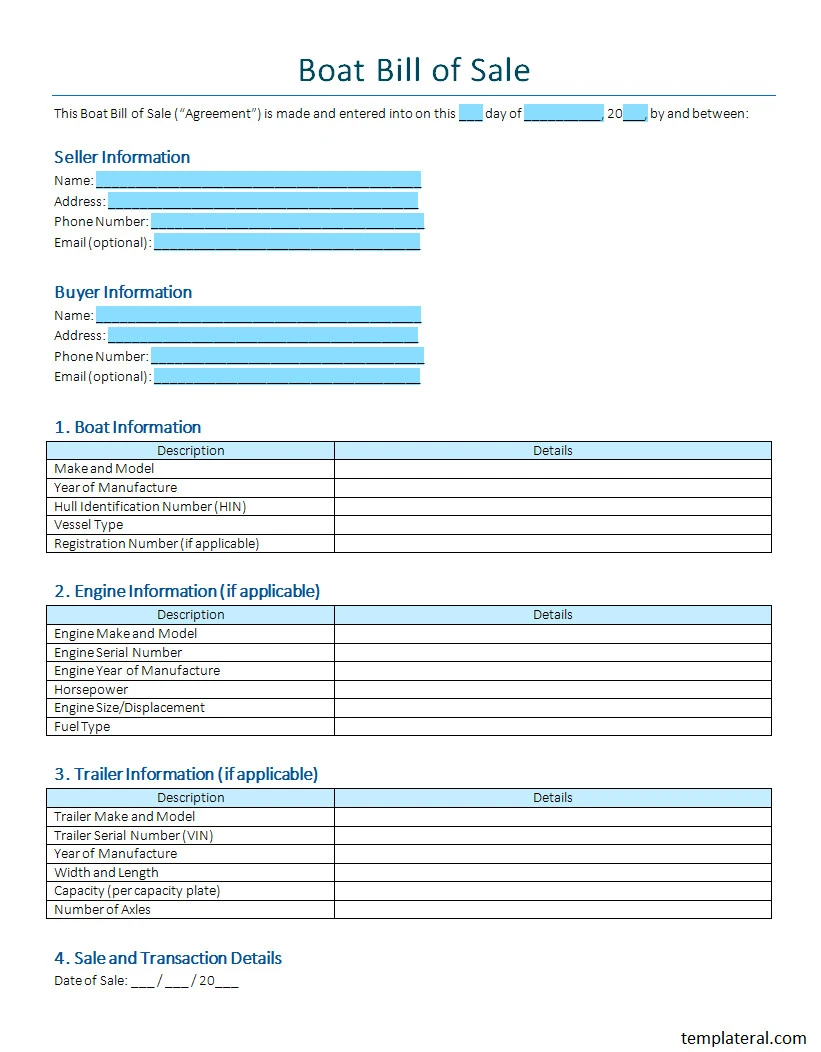
When buying or selling a boat, it’s essential to have a legally binding document that officially records the transfer of ownership. This document, known as a Boat Bill of Sale, provides both the buyer and seller with proof of the transaction and protects their interests by outlining the terms and conditions of the sale.
In this guide, we’ll cover everything you need to know about Boat Bills of Sale, why they matter, what to include in them, and how to draft one effectively.
What is a Bill of Sale for a Boat?
A Boat Bill of Sale is a legal document that serves as evidence of the transfer of ownership from the seller to the buyer. It includes details about the boat, such as the make, model, year, hull identification number (HIN), and any accessories or equipment included in the sale.
Both parties sign the document to indicate their agreement to the terms and conditions of the sale.
Why a Bill of Sale Matters?
A Boat Bill of Sale is crucial for both the buyer and the seller. For the buyer, it acts as proof of ownership and is often required for registration and insurance purposes. It provides legal protection in case of disputes or issues with the sale. For the seller, the Bill of Sale documents the completion of the sale and the transfer of responsibility, helping to prevent any future complications or disagreements.
Protection for Buyers
For buyers, a Boat Bill of Sale provides essential protection by documenting the sale and serving as proof of ownership. This document can safeguard their investment, especially in the event of disputes regarding the boat’s condition, title, or ownership rights. It also ensures that the buyer has legal recourse if the seller fails to fulfill their obligations.
Legal Recourse for Sellers
For sellers, a Boat Bill of Sale serves as evidence that the transfer of ownership has occurred, releasing them from any future liabilities related to the boat. If the buyer encounters issues or tries to hold the seller responsible for undisclosed defects or problems with the boat, the Bill of Sale can protect the seller by establishing the terms of the sale.
Compliance with Regulations
Having a Boat Bill of Sale is often a legal requirement for registering the boat with the relevant authorities or obtaining insurance coverage. By ensuring that the sale is documented through a Bill of Sale, both parties can comply with legal regulations and avoid potential penalties or problems down the line.
Proof of Purchase
A Boat Bill of Sale serves as concrete proof that the buyer has purchased the boat from the seller. In case of any discrepancies or disagreements, this document can be used to demonstrate the terms agreed upon by both parties, including the price, condition of the boat, and any warranties or guarantees provided.
Prevention of Disputes
By clearly outlining the terms and conditions of the sale, a Boat Bill of Sale helps prevent misunderstandings or disagreements between the buyer and seller. It establishes a written record of the transaction, reducing the likelihood of disputes arising over issues such as payment, delivery, or the condition of the boat.
What To Include In a Boat Bill of Sale?
When drafting a Boat Bill of Sale, it’s important to include the following information:
Details of the Parties Involved
Include the full names, addresses, phone numbers, and email addresses of both the buyer and seller. Providing accurate contact information ensures that both parties can be reached if needed after the sale.
Description of the Boat
Provide a detailed description of the boat, including the make, model, year, color, length, condition, and any unique features or modifications. This information helps clearly identify the boat being sold.
Hull Identification Number (HIN)
The HIN is a unique 12-character identifier assigned to each boat, similar to a VIN for a car. Including the HIN in the Bill of Sale helps verify the boat’s identity and prevent fraud or misrepresentation.
Accessories and Equipment
List any accessories, equipment, or additional items included in the sale, such as life jackets, anchors, GPS devices, or trailers. Clearly stating what is included in the sale helps avoid misunderstandings later on.
Purchase Price
Specify the agreed-upon purchase price for the boat in both numeric and written form to avoid any confusion. Include details about any deposits paid and the total amount due at the time of sale.
Payment Terms
Outline the payment terms agreed upon by both parties, including the method of payment, payment schedule, and any late fees or penalties for missed payments. Both parties should be clear on how and when payment will be made.
Delivery Details
Specify how and when the boat will be delivered to the buyer, including any arrangements for transport, storage, or inspection. Clearly defining the delivery process helps both parties plan accordingly.
Warranties or Guarantees
If the seller is providing any warranties or guarantees for the boat, such as a warranty for the engine or hull, these should be clearly stated in the Bill of Sale. Including warranty information helps protect the buyer’s interests.
How to Draft a Boat Bill of Sale
Here’s a step-by-step guide on how to draft a Boat Bill of Sale:
Gather Information
Collect all the necessary details about the boat and the parties involved in the sale. This includes information about the boat’s make, model, year, condition, accessories, and the buyer’s and seller’s contact information.
Create the Document
Use a template or create a document that includes all the required information. Make sure the document is clear, concise, and legally compliant to avoid any misunderstandings or disputes later on.
Include Terms and Conditions
Outline the terms and conditions of the sale in detail. This includes payment terms, delivery details, warranties or guarantees, and any other agreements made between the buyer and seller. Both parties should review and agree to these terms before signing the Bill of Sale.
Review and Edit
Thoroughly review the document to ensure that all information is accurate and complete. Check for any errors or omissions, and make any necessary edits to clarify the terms of the sale. Both parties must understand and agree to the content of the Bill of Sale before signing.
Sign and Date
Once the document is finalized, both parties should sign and date the Boat Bill of Sale in the presence of witnesses if required by local laws. Signatures indicate that both parties agree to the terms and conditions outlined in the document, making it legally binding.
Keep Copies
Make copies of the signed Boat Bill of Sale for both the buyer and seller to keep for their records. Having duplicate copies ensures that both parties have a copy of the agreement in case it needs to be referenced in the future or used for registration, insurance, or legal purposes.
Ways to Make the Boat Sales Process Easier
Here are some tips to make the boat sales process smoother:
Be Transparent
Provide all relevant information about the boat to potential buyers, including its condition, maintenance history, and any known issues. Transparency builds trust and helps buyers make informeddecisions, leading to a smoother sales process and reducing the likelihood of disputes later on.
Use a Broker
Consider working with a reputable boat broker to help facilitate the sale. A broker can assist with marketing the boat, negotiating with potential buyers, handling paperwork, and ensuring a smooth transaction process. Their expertise can be invaluable in navigating the complexities of boat sales.
Get a Pre-Purchase Inspection
Before finalizing the sale, consider having the boat inspected by a professional surveyor or mechanic. A thorough inspection can uncover any hidden issues or maintenance needs, giving both the buyer and seller peace of mind and ensuring that the transaction is fair and transparent.
Be Prepared
Ensure that all necessary documents, including the Boat Bill of Sale, title transfer paperwork, maintenance records, and any warranties or guarantees, are organized and readily available. Being prepared with all the required documentation streamlines the sales process and instills confidence in potential buyers.
Communicate Clearly
Clear and open communication is key to a successful boat sale. Make sure all terms, conditions, and agreements are clearly communicated to the buyer, and be available to address any questions or concerns they may have. Prompt and transparent communication builds trust and fosters a positive sales experience.
Follow Up
After the sale is complete, stay in touch with the buyer to ensure a smooth transition of ownership. Address any post-sale questions or issues promptly and professionally, and offer assistance with registration, insurance, or any other post-sale needs. Building a positive relationship with the buyer can lead to future referrals and repeat business.
Seek Legal Advice
If you’re unsure about any aspect of the sale, don’t hesitate to seek legal advice from a qualified attorney specializing in maritime law. A legal professional can review the Boat Bill of Sale, guide compliance with local regulations, and ensure that your interests are protected throughout the sales process. Legal advice can help prevent costly mistakes and legal disputes down the road.
Boat Bill of Sale Template – DOWNLOAD
