Business travel can be both exciting and stressful. Whether you are a seasoned business traveler or embarking on your first work trip, having a well-organized and detailed itinerary is crucial for a successful journey.
A business travel itinerary serves as a comprehensive roadmap for your trip, ensuring organization, productivity, and budget management. It provides a clear, detailed schedule of travel logistics, meetings, and activities, keeping you informed, helping you manage your time efficiently, reducing stress, and minimizing the risk of missed appointments.
Ultimately, a well-crafted itinerary supports the goals of your trip and reinforces your company’s commitment to professionalism.
What is a Business Travel Itinerary?
A business travel itinerary is a document that outlines all the details of your trip, including travel arrangements, accommodation, meeting schedules, and other important activities. It serves as a guide for your journey, helping you stay on track and make the most of your time away from the office.
A well-planned itinerary not only ensures that you don’t miss any important appointments but also helps you manage your expenses and stay productive while on the road.
Why You Need a Business Travel Itinerary?
There are several reasons why having a business travel itinerary is essential for every business traveler:
Organization
Organization is key to a successful business trip. By having a detailed itinerary in place, you can easily keep track of your schedule, know where you need to be at any given time, and ensure that you are prepared for each meeting or activity. Without a well-organized itinerary, you may find yourself scrambling to remember important details or missing key appointments, leading to a less effective trip overall.
Productivity
Productivity is essential for business travelers who need to make the most of their time on the road. A well-planned itinerary can help you structure your day efficiently, allowing you to allocate time for meetings, work tasks, and downtime. By following a schedule outlined in your itinerary, you can ensure that you stay focused and on track, maximizing your productivity during the trip.
Budget Management
Managing expenses is a critical aspect of business travel. Without a clear itinerary that outlines your travel and accommodation costs, as well as any other expenses you may incur during the trip, it can be challenging to stay within budget. By tracking your expenses in your itinerary, you can monitor your spending and make adjustments as needed to ensure that you stay on target financially.
Time Efficiency
Time is a precious commodity for business travelers who often have packed schedules and tight deadlines to meet. With a well-planned itinerary, you can make the most of every minute of your trip, ensuring that you are using your time efficiently and effectively. By mapping out your activities in advance and sticking to your schedule, you can avoid wasting time and focus on achieving your goals for the trip.
Reduced Stress
Traveling for business can be stressful, with tight deadlines, unfamiliar locations, and the pressure to perform well in meetings. A detailed itinerary can help alleviate some of this stress by providing a clear roadmap for your trip. Knowing where you need to be and when can reduce anxiety and uncertainty, allowing you to approach each day with confidence and peace of mind.
Minimized Risk of Missed Appointments
Missing an important meeting or appointment can have serious consequences for your business trip. A well-crafted itinerary can help you avoid this risk by clearly outlining your schedule and ensuring that you are always aware of your upcoming commitments. By following your itinerary closely and planning, you can minimize the chances of missing any key appointments and maintain a professional image throughout your trip.
Key Elements of a Business Travel Itinerary
When creating a business travel itinerary, there are several key elements that you should include to ensure that your trip runs smoothly:
Travel Details
The travel details section of your itinerary should include all the information related to your transportation and accommodation arrangements. This may include flight numbers, departure and arrival times, seat assignments, hotel confirmations, check-in and check-out times, and any other relevant details. By including comprehensive travel details in your itinerary, you can ensure that you have all the information you need to navigate your journey smoothly.
Meeting Schedule
Meetings are a central focus of many business trips, making it essential to include a detailed meeting schedule in your itinerary. For each meeting, include the date, time, location, purpose, and participants involved. This information will help you stay on track and ensure that you are well-prepared for each meeting. By outlining your meeting schedule in advance, you can effectively manage your time and make the most of your interactions with clients, colleagues, and other stakeholders.
Activity Plan
In addition to business meetings, business travel often includes social events, networking opportunities, or other activities. Your itinerary should include an activity plan that outlines any non-business-related events you will be attending during your trip. This may include dinners, receptions, city tours, or other activities that are part of your itinerary. By including these activities in your itinerary, you can balance work and leisure time effectively and make the most of your trip.
Contact Information
Having access to contact information for key individuals during your trip is essential for staying connected and informed. Include contact details for your colleagues, clients, local contacts, and anyone else you may need to reach during your trip. This information should be easily accessible in your itinerary so that you can quickly get in touch with the right person when needed. By including contact information in your itinerary, you can stay connected and ensure that you have the support you need while traveling.
Emergency Plan
While no one wants to encounter an emergency during a business trip, it’s important to be prepared for unexpected events. Your itinerary should include an emergency plan that outlines procedures to follow in case of a medical emergency, natural disaster, travel disruption, or other unforeseen circumstances. Include contact information for local emergency services, as well as details for your company’s travel coordinator or emergency contact person. By having an emergency plan in place, you can respond quickly and effectively to any unexpected situations that may arise during your trip.
How to Create a Business Travel Itinerary
Creating a business travel itinerary may seem like a daunting task, but with proper planning and organization, it can be relatively straightforward. Here are some steps to help you create an effective itinerary for your next business trip:
Gather Information
Start by gathering all the necessary information for your trip, including travel confirmations, meeting invitations, and contact details for your colleagues and clients. Having all the relevant information in one place will make it easier to create a comprehensive itinerary that meets your needs.
Determine Your Schedule
Outline the dates and times of your trip, including travel days, meeting times, and any free time you may have for activities or relaxation. Consider any time zone differences or local customs that may impact your schedule and plan accordingly.
Organize Your Travel Logistics
Arrange your transportation and accommodation, making sure to include all relevant details in your itinerary, such as flight numbers, hotel addresses, and check-in/check-out times. Double-check these details to ensure accuracy and make any necessary reservations in advance.
Plan Your Meetings and Activities
Create a schedule for your meetings, including the names of the people you will be meeting with, as well as any social or networking events you plan to attend. Be sure to allocate enough time for each meeting and factor in travel time between locations.
Include Important Contact Information
Make sure to include contact details for your colleagues, clients, and any other important contacts you may need to reach during your trip. Include phone numbers, email addresses, and any other relevant information to ensure that you can easily get in touch with the right person when needed.
Prepare an Emergency Plan
Include information about local emergency services, as well as contact details for your company’s travel coordinator or emergency contact person in case of any unforeseen events. Research the emergency procedures for your destination and be prepared to follow them in case of an emergency.
Review and Finalize Your Itinerary
Before you depart for your trip, take the time to review and finalize your itinerary. Double-check all the details to ensure accuracy and completeness, and make any necessary updates or changes. Share your itinerary with a colleague or supervisor for an additional set of eyes to ensure that everything is in order.
Share Your Itinerary
Share your finalized itinerary with your colleagues, clients, and anyone else who may need to know your schedule during your trip. This will help keep everyone informed and on the same page, ensuring that all stakeholders are aware of your plans and can reach you if needed. Provide both digital and printed copies of your itinerary for easy access.
Tips for Successful Business Travel Itineraries
Here are some additional tips to help you create a successful business travel itinerary:
Use a Digital Itinerary Management Tool
Utilize technology to streamline your itinerary management process. There are several digital tools available that can help you create, update, and access your itinerary on the go. These tools often allow you to sync your itinerary across multiple devices, set reminders for important events, and share your itinerary with others easily.
Include Buffer Time in Your Schedule
Build flexibility into your itinerary by including buffer time between meetings and activities. This extra time can help you account for unexpected delays, traffic congestion, or last-minute changes to your schedule. By allowing for buffer time, you can avoid feeling rushed and ensure that you have time to handle any unforeseen circumstances that may arise.
Check the Weather Forecast
Before you pack for your trip, check the weather forecast for your destination. Knowing what the weather will be like can help you pack appropriate clothing and accessories, ensuring that you are prepared for any conditions you may encounter. Consider packing versatile items that can be layered for varying temperatures or weather conditions.
Stay Flexible
While having a detailed itinerary is essential, it’s also important to remain flexible during your trip. Plans may change, meetings may run longer than expected, or new opportunities may arise. Be prepared to adjust your itinerary as needed and embrace any unexpected events as part of the adventure of business travel.
Keep a Copy of Your Itinerary Handy
Make sure that you have access to your itinerary at all times during your trip. Keep a copy on your phone or tablet, in a digital file stored in the cloud, and in printed format in your travel bag. Having multiple copies ensures that you can refer to your itinerary easily, even if you encounter technical issues or other challenges while on the road.
Stay Organized and Prioritize Tasks
Staying organized is key to making the most of your time on a business trip. Prioritize your tasks based on their importance and deadlines, and allocate time for each activity in your itinerary. By staying focused and disciplined, you can accomplish your goals efficiently and effectively, making the most of your business travel experience.
By following these tips and creating a detailed business travel itinerary, you can ensure that your trip is well-planned, organized, and successful. A well-crafted itinerary will help you stay on track, manage your time efficiently, reduce stress, and ultimately achieve your business goals while reinforcing your company’s commitment to professionalism.
Free Business Travel Itinerary Template
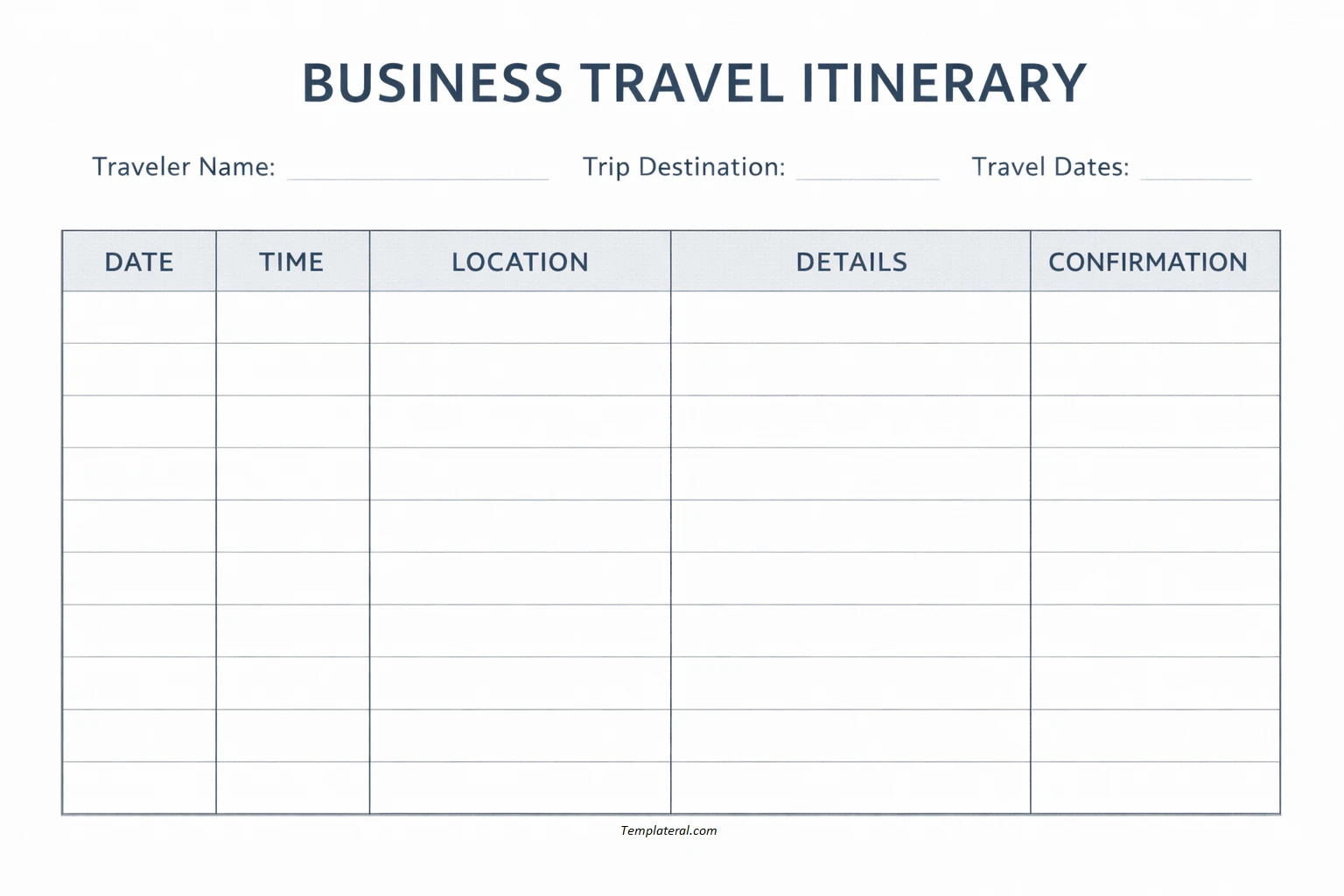
A Business Travel Itinerary helps you organize flights, accommodations, meetings, and transportation details in one clear and professional document. It ensures important travel information is easy to access, reducing stress and supporting efficient planning. With a well-structured template, you can stay on schedule, manage business trips smoothly, and focus on your work.
Download our Business Travel Itinerary Template today to plan business travel efficiently and stay organized on the go.
Business Travel Itinerary Template – DOWNLOAD
