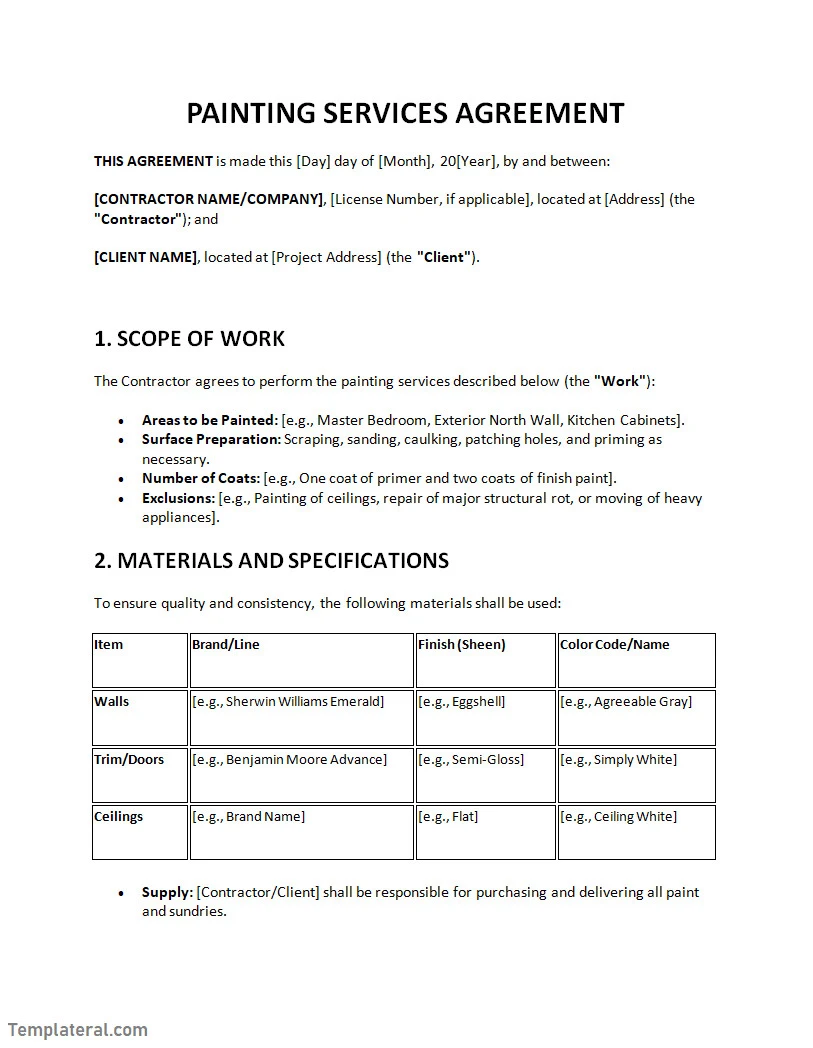
When hiring a painting contractor for your home or business, having a painting agreement in place is vital.
A painting agreement is a legally binding document that serves as a roadmap and an insurance policy for the project. Its primary purpose is to set clear, shared expectations and protect both parties from potential disputes, misunderstandings, unexpected costs, and liability.
What is a Painting Agreement?
A painting agreement is a formal contract between a client and a painting contractor that outlines the terms and conditions of the painting project. It serves as a written record of the agreed-upon scope of work, timeline, cost, payment schedule, warranties, and other important details.
By clearly defining the expectations and responsibilities of both parties, a painting agreement helps prevent misunderstandings and disputes down the line.
Why is a Painting Agreement Important?
Having a painting agreement in place is crucial for several reasons:
- Clarity: It clearly outlines the scope of work, timeline, cost, and other important details of the project.
- Protection: It protects both the client and the painting contractor from potential disputes, unexpected costs, and liability.
- Expectations: It sets clear, shared expectations for the project, reducing the likelihood of misunderstandings.
- Legal Compliance: It ensures that the painting project complies with all relevant laws and regulations.
Key Elements of a Painting Agreement
A well-crafted painting agreement should include the following key elements:
- Scope of Work: A detailed description of the work to be done, including the type of paint to be used, surface preparation, number of coats, etc.
- Timeline: A schedule outlining the start and end dates of the project, as well as any milestones or deadlines.
- Cost: A breakdown of the total cost of the project, including labor, materials, and any additional fees.
- Payment Schedule: A schedule of when and how payments will be made throughout the project.
- Warranties: Any warranties or guarantees provided by the painting contractor for their work.
- Insurance: Proof of insurance coverage, including liability insurance and workers’ compensation.
- Change Orders: A process for handling any changes to the scope of work or cost during the project.
- Dispute Resolution: A procedure for resolving any disputes that may arise during the project.
How to Create a Painting Agreement
Creating a painting agreement involves the following steps:
- Define the Scope of Work: Clearly outline the work to be done, including any specific requirements or preferences.
- Set a Timeline: Establish a timeline for the project, including start and end dates, milestones, and deadlines.
- Determine the Cost: Calculate the total cost of the project, including labor, materials, and any additional fees.
- Establish a Payment Schedule: Agree on when and how payments will be made throughout the project.
- Include Warranties and Insurance: Specify any warranties or guarantees provided by the contractor, as well as proof of insurance coverage.
- Outline Change Orders and Dispute Resolution: Include provisions for handling changes to the scope of work and resolving disputes.
Tips for Successful Painting Agreements
Here are some tips for creating a successful painting agreement:
- Be Specific: Clearly define the scope of work, timeline, cost, and other important details.
- Communicate Clearly: Ensure that both parties have a clear understanding of the terms and conditions of the agreement.
- Review and Revise: Review the agreement carefully before signing and make any necessary revisions.
- Get Everything in Writing: Document all discussions and agreements in writing to avoid misunderstandings.
- Seek Legal Advice: If in doubt, consult with a legal professional to ensure that the agreement is legally sound.
- Sign and Date: Both parties should sign and date the agreement to make it legally binding.
In Conclusion
A painting agreement is a crucial document that helps protect both clients and painting contractors from potential disputes and unexpected costs. By clearly outlining the terms and conditions of the project, a painting agreement sets the stage for a successful and stress-free painting experience. Remember to communicate openly, review the agreement carefully, and seek legal advice if needed to ensure that your painting agreement is comprehensive and legally sound.
Painting Agreement Template – Download
