In today’s competitive business landscape, small businesses need every advantage they can get to stand out and attract customers. One often overlooked yet crucial element of running a successful small business is effectively communicating operating hours to customers. This is where printable business hours signs come in.
These simple yet powerful tools can inform customers when a business is open for service and when they can expect to reach staff for assistance. By providing this information upfront, companies can build trust with their customers, improve customer satisfaction, and ultimately drive more sales.
What are Business Hours?
Business hours are the specific times during which a business is open for operation.
These hours can vary depending on the type of business, industry, and location. For brick-and-mortar businesses, business hours typically refer to the times when customers can visit the physical location, interact with staff, make purchases, or seek assistance. For online businesses, business hours may refer to the times when customer service representatives are available to assist with inquiries or issues.
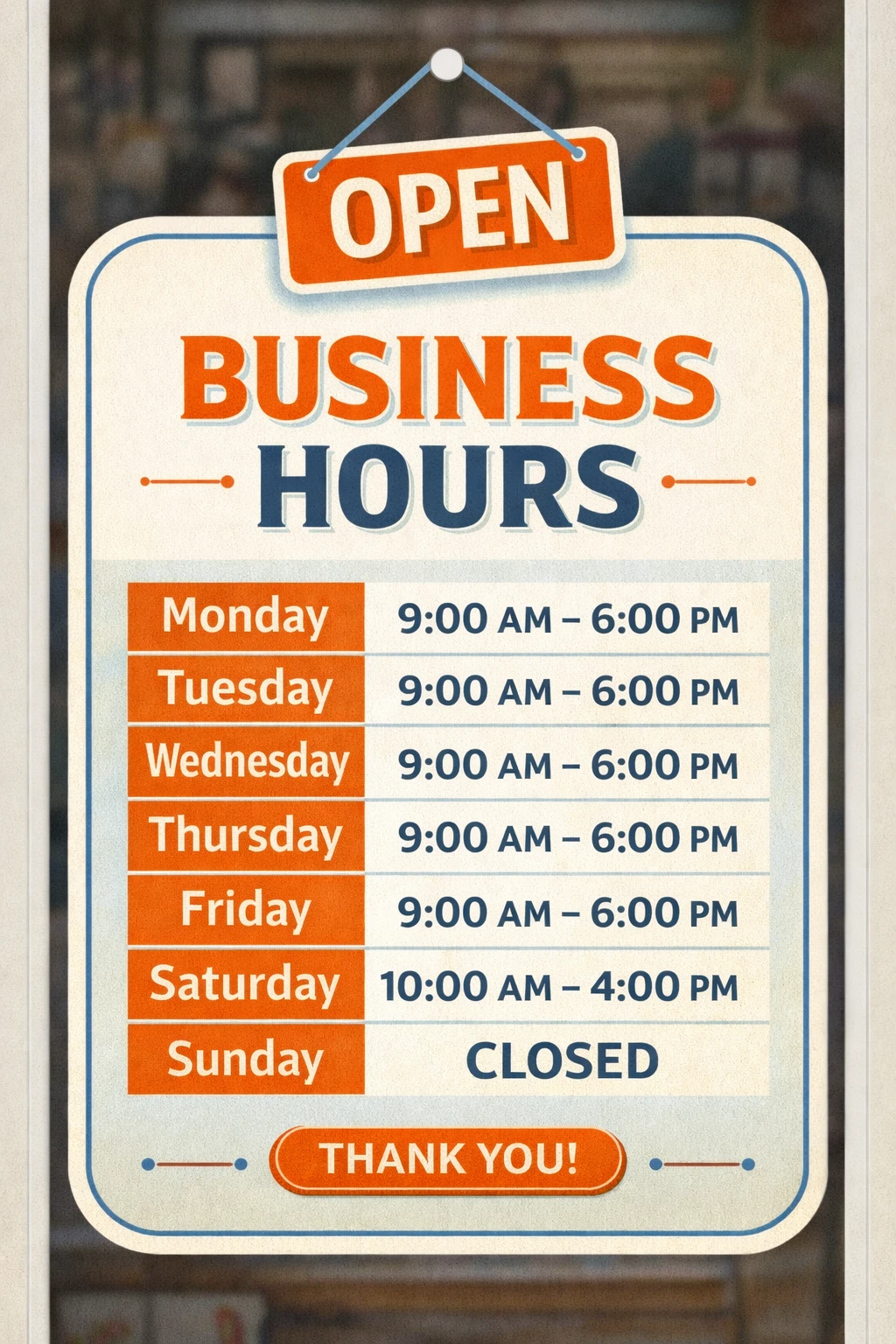
Why Setting Business Hours is Important for Your Small Business?
Setting clear business hours is crucial for small businesses for several reasons.
Customer Expectations and Experience
Customers today expect businesses to be transparent and accessible. By clearly communicating business hours, small businesses can meet these expectations and provide a positive customer experience. When customers know when a business is open, they can plan their visits or interactions accordingly, leading to a smoother and more efficient experience. This can help build trust and loyalty with customers over time.
Competitive Advantage
In a crowded marketplace, small businesses need every advantage they can get to stand out from the competition. Communicating clear and consistent business hours can give small businesses a competitive edge by making it easier for customers to engage with the business. When customers know when they can reach a business for assistance or make a purchase, they are more likely to choose that business over others that may not provide the same level of clarity.
Operational Efficiency and Resource Management
Effective management of resources is key to the success of any small business. By setting and communicating clear business hours, businesses can optimize their operations and allocate resources more efficiently. For example, if a business knows that it experiences peak customer traffic during certain hours, it can schedule additional staff to meet the demand. This can help prevent long wait times, improve customer satisfaction, and ultimately drive more revenue.
Building Relationships with Customers
Clear communication of business hours can also help small businesses build stronger relationships with their customers. When customers know when they can reach a business for support or service, they are more likely to feel valued and appreciated. This can lead to increased customer loyalty, repeat business, and positive word-of-mouth referrals. By prioritizing customer relationships through effective communication of business hours, small businesses can foster long-term success.
Strategies for Optimizing Hours of Business
Optimizing business hours can have a significant impact on a small business’s success. Here are some strategies to consider:
1. Analyze Customer Traffic Patterns
Understanding customer traffic patterns is essential for optimizing business hours. By analyzing data on when customers are most likely to visit or contact the business, small businesses can identify peak hours of operation and adjust their hours accordingly. This can help businesses better meet customer demand and improve overall operational efficiency.
2. Offer Extended Hours During Peak Times
During peak times of customer traffic, consider offering extended hours to accommodate more customers. By staying open later or opening earlier during these peak periods, businesses can capture additional sales opportunities and provide better service to customers. This can help businesses maximize revenue and enhance the overall customer experience.
3. Utilize Technology to Automate Scheduling
Technology can be a powerful tool for optimizing business hours. Consider using scheduling software or platforms that can automate the scheduling of staff based on customer demand. By leveraging technology, businesses can make data-driven decisions about when to be open and adjust their hours in real time to meet customer needs.
4. Proactively Communicate Changes in Hours
It’s important to proactively communicate any changes in business hours to customers. Whether it’s for holidays, special events, or unexpected closures, keeping customers informed about changes in hours can help prevent confusion and frustration. Consider updating your website, social media channels, and physical signage to ensure that customers are aware of any changes in operating hours.
5. Monitor and Evaluate Impact of Changes
After making adjustments to business hours, it’s crucial to monitor and evaluate the impact of these changes on customer satisfaction and operational efficiency. Collect feedback from customers about their experience with the new hours, track sales data during different time periods, and assess staff productivity. This information can help businesses make informed decisions about future adjustments to business hours.
6. Offer Online Services Outside Regular Hours
In today’s digital age, many customers expect businesses to be accessible online 24/7. Consider offering online services outside of regular business hours to cater to a wider range of customers. This could include online chat support, email inquiries, or self-service options on your website. By providing these alternative channels for customer interaction, businesses can increase customer satisfaction and attract new customers who prefer to engage online.
7. Create a Customer-Focused Business Hours Policy
Developing a customer-focused business hours policy can help small businesses prioritize the needs of their customers. Consider factors such as customer preferences, industry norms, and competitor hours when setting business hours. By putting the customer at the center of your business hours strategy, you can better meet their needs, enhance their experience, and build long-term loyalty.
Example Hours of Business
Here is an example of how business hours might be formatted for a small retail store:
Weekday Hours
Monday – Thursday: 9:00 am – 7:00 pm
Friday: 9:00 am – 8:00 pm
Weekend Hours
Saturday: 10:00 am – 6:00 pm
Sunday: 11:00 am – 4:00 pm
Holiday Hours
Special Holiday Hours: Vary based on specific holidays
Extended Hours
Extended Hours for Special Events: As needed
Free Business Hours Template
Business Hours Template – DOWNLOAD
