A bill of sale is a written record that documents the sale or transfer of an item from a seller to a buyer. It can provide useful evidence of what was sold, who bought it, who sold it, when the transaction occurred, and what price was agreed upon.
A bill of sale is commonly associated with private sales of vehicles, boats, equipment, electronics, furniture, and other valuable personal property. The exact requirements vary depending on the state, type of property, and transaction. For example, California DMV recognizes a bill of sale as a document that can identify a vehicle or vessel and help establish a chain of ownership.
Using a clear bill of sale template can make a private transaction easier to document. A well-organized form gives both parties a place to record the transaction details and retain a copy for their records.
What Is a Bill of Sale?
A bill of sale is a document that records the details of a sale between a buyer and a seller. It typically identifies the parties, describes the property, states the purchase price, and records the date of the transaction.
Depending on the transaction, the document may also include information about the condition of the property, payment method, warranties, signatures, and other agreed terms.
A bill of sale can be useful because it creates a written record instead of relying only on verbal agreements. If questions arise later about the transaction, the document can help both parties remember what was agreed upon.
What Is a Bill of Sale Used For?
A bill of sale can serve several practical purposes. Its usefulness depends on the type of property being transferred and the rules that apply to the transaction.
- Documenting the date of a sale.
- Identifying the buyer and seller.
- Describing the property that was sold.
- Recording the agreed purchase price.
- Documenting payment terms.
- Recording the condition of an item.
- Providing a written record for both parties.
- Supporting ownership or title-transfer paperwork when applicable.
For vehicle transactions, a bill of sale may be one part of a larger ownership-transfer process. It should not automatically be assumed to replace a title, registration document, odometer disclosure, or other paperwork required by a particular jurisdiction.
What Information Should a Bill of Sale Include?
A good bill of sale should contain enough information to clearly identify the transaction and the property being transferred. The exact requirements vary, but a general bill of sale often includes several important sections.
Seller Information
The seller section should identify the person or business transferring ownership. Common fields include the seller’s full name, address, telephone number, and email address.
Buyer Information
The buyer section identifies the person or business receiving the property. Including accurate contact information can make the document easier to reference later.
Date of Sale
The date of sale establishes when the transaction took place. This information can be particularly important when ownership, registration, tax, warranty, or liability questions depend on the transaction date.
Item Description
The property should be described clearly enough that it can be distinguished from other similar items. Depending on the type of property, the description may include:
- Item type.
- Make or brand.
- Model.
- Year.
- Color.
- Serial number.
- Vehicle identification number (VIN), when applicable.
- License plate information, when applicable.
- Other identifying details.
For a vehicle, using the correct VIN and other identifying information is especially important. Official DMV requirements can vary, so buyers and sellers should check the requirements of the relevant state before completing a transaction.
Purchase Price
The bill of sale should clearly state the agreed purchase price. A template may provide space for both the numerical amount and the amount written in words.
Payment Terms
The document can also identify how the buyer paid or will pay. Depending on the transaction, this could include cash, check, electronic transfer, financing, or another agreed method.
Signatures
Many bill of sale forms provide signature areas for both the buyer and seller. Signatures can help demonstrate that both parties reviewed and accepted the information recorded in the document.
Bill of Sale Template
A bill of sale template provides a structured way to record the essential details of a private transaction. Instead of creating a document from scratch, the buyer and seller can fill in the relevant fields and retain copies for their records.
The printable template below includes sections for seller information, buyer information, item description, purchase price, payment terms, item condition, additional notes, and signatures.
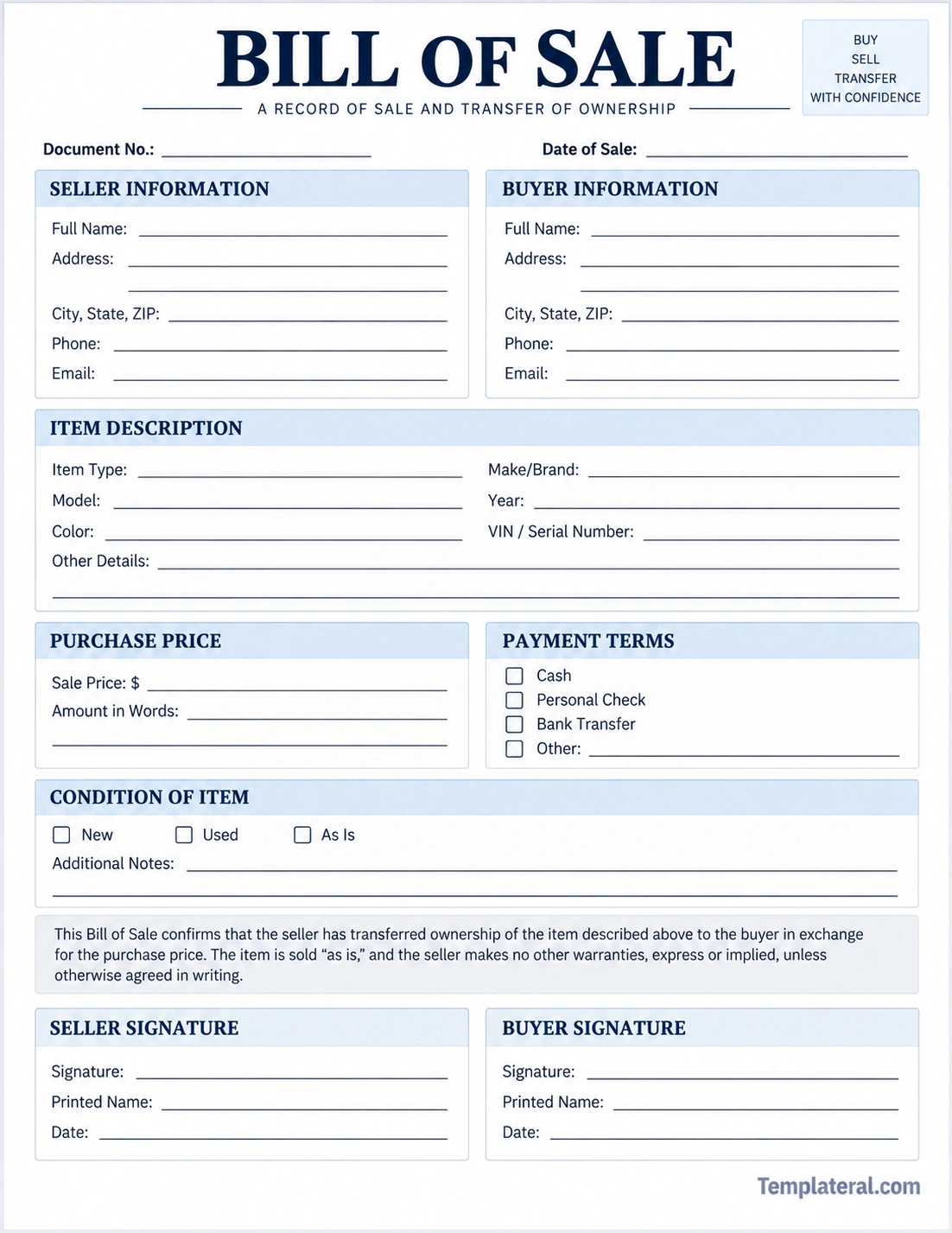
The template is designed as a general-purpose form. It can be adapted for appropriate private transactions, but users should verify whether their state, county, DMV, or another authority requires a specific official form.
How to Fill Out a Bill of Sale
Completing a bill of sale is generally straightforward when both parties have the necessary information available.
Step 1: Enter the Date of Sale
Start by recording the date on which the transaction occurs. Use the actual transaction date and make sure it matches any other documents being completed at the same time.
Step 2: Identify the Seller and Buyer
Enter the legal names of the seller and buyer. Add the requested contact information and review all names for spelling errors before signing.
Step 3: Describe the Property
Provide a detailed description of the item being sold. Include identifying numbers whenever appropriate.
For example, a vehicle bill of sale may include the year, make, model, VIN, license plate information, and other identifying details. California DMV’s bill of sale form specifically includes fields for vehicle or vessel identification, seller and buyer information, sale date, and selling price.
Step 4: Record the Purchase Price
Enter the agreed price accurately. If the property is being transferred as a gift rather than sold, use the appropriate gift information required by the relevant jurisdiction or form.
Step 5: Describe the Condition
If appropriate, document whether the property is new, used, sold as-is, or subject to specific written terms. The parties should make sure that any important promises or warranties are clearly documented rather than relying on an informal conversation.
Step 6: Review and Sign
Both parties should review the completed document carefully. Check the names, dates, property description, price, and other important information before signing.
Step 7: Keep Copies
The buyer and seller should each retain a copy of the completed bill of sale. Digital copies may also be useful as a backup, provided they are stored securely.
Bill of Sale for a Vehicle
Vehicle sales are one of the most common situations in which people search for a bill of sale. However, vehicle transactions often involve additional documents and requirements.
A vehicle bill of sale may identify the buyer and seller, vehicle information, purchase price, and date of sale. Depending on the state, it may be required for registration or ownership documentation, or it may simply supplement other ownership records.
For example, California DMV states that buyers in private-party vehicle purchases need the properly signed title and may also need a bill of sale in certain circumstances. California DMV also identifies other requirements that may apply, such as odometer information and applicable fees.
Because requirements differ between jurisdictions, a generic vehicle bill of sale should not be treated as a substitute for an official DMV form when one is required.
Bill of Sale for Different Types of Property
The basic structure of a bill of sale can be adapted to many types of personal property.
Car Bill of Sale
A car bill of sale typically includes the buyer and seller, vehicle identification information, purchase price, date, and signatures. Additional documents may be required for title and registration.
Motorcycle Bill of Sale
A motorcycle bill of sale can include the motorcycle’s make, model, year, VIN, mileage when appropriate, purchase price, and other identifying details.
Boat Bill of Sale
A boat bill of sale may include the vessel identification number, make, model, year, registration information, purchase price, and buyer and seller details.
Equipment Bill of Sale
For equipment, machinery, or tools, the form can record the manufacturer, model, serial number, condition, accessories, and purchase price.
Personal Property Bill of Sale
A general personal property bill of sale can be used to document appropriate transactions involving items such as furniture, appliances, electronics, collectibles, or other property.
Is a Bill of Sale the Same as a Title?
No. A bill of sale and a title are not necessarily the same document.
A bill of sale records the transaction between the parties. A title is an official ownership document used for certain types of property, particularly titled vehicles and vessels.
Whether a bill of sale can establish or support ownership depends on the type of property and the applicable jurisdiction. California DMV, for example, explains that bills of sale can be used in certain situations to establish a chain of ownership, while other title documents may still be required.
For a vehicle purchase, buyers should check their state’s title-transfer requirements rather than assuming that a signed bill of sale alone completes the ownership transfer.
Does a Bill of Sale Need to Be Notarized?
There is no single nationwide rule requiring every bill of sale to be notarized. Requirements depend on the jurisdiction, property type, and transaction.
For example, California DMV states that its bill of sale does not require notarization or witnesses.
That does not mean notarization is unnecessary everywhere. If a state agency, contract, lender, or other authority requires notarization, follow that specific requirement.
Bill of Sale Best Practices
A clear document can reduce misunderstandings between the parties. Before completing a transaction, consider the following practices:
- Use accurate legal names for the buyer and seller.
- Describe the property in sufficient detail.
- Record identification numbers accurately.
- Write down the agreed purchase price.
- Document important conditions or warranties.
- Use the actual transaction date.
- Have both parties review the document before signing.
- Give both parties a copy of the completed document.
- Keep supporting ownership documents together.
- Check local requirements before completing a vehicle or vessel transaction.
Common Mistakes to Avoid
Small errors can create unnecessary problems after a transaction. Take time to review the document before it is signed.
- Incorrect identification number: Double-check the VIN or serial number.
- Missing signatures: Make sure all required parties sign the document.
- Unclear price: Record the exact agreed amount.
- Incomplete item description: Include enough information to identify the property.
- Wrong transaction date: Use the actual date of sale.
- Ignoring official requirements: Check the appropriate state or local agency for required forms.
- Failing to keep a copy: Both parties should retain documentation for their records.
Frequently Asked Questions About Bill of Sale Forms
What is the purpose of a bill of sale?
A bill of sale documents a transaction between a buyer and seller. It can identify the parties, property, sale date, purchase price, and other agreed details.
Can I use a generic bill of sale template?
A generic template can be useful for organizing a transaction, but it may not satisfy every legal or administrative requirement. Check the requirements that apply to your state and the type of property being sold.
Does a bill of sale prove ownership?
A bill of sale can provide evidence of a transaction and may help establish a chain of ownership in some circumstances. However, it is not automatically a substitute for an official title or registration document.
Should the buyer and seller each receive a copy?
Yes. Keeping a copy gives both parties a record of the transaction and the terms that were documented at the time of sale.
Can a bill of sale be used for a car?
Yes. A vehicle bill of sale is commonly used to document private vehicle transactions. However, the exact documents needed for title and registration vary by jurisdiction. Check the relevant DMV or motor vehicle agency before completing the sale.
Conclusion
A bill of sale is a practical way to create a written record of a private transaction. It can document who bought and sold the property, what was transferred, when the transaction occurred, and how much was agreed upon.
A well-designed bill of sale template makes the process easier by organizing buyer and seller information, property details, purchase price, payment terms, condition, and signatures in one document. For vehicles and other regulated property, however, the template should be used alongside any official title, registration, transfer, or disclosure forms required by the applicable jurisdiction.
Before signing, review every detail carefully and confirm the requirements that apply to your particular transaction. A clear and accurate record can help both the buyer and seller keep their documentation organized long after the sale is complete.
Download: Bill of Sale Template
