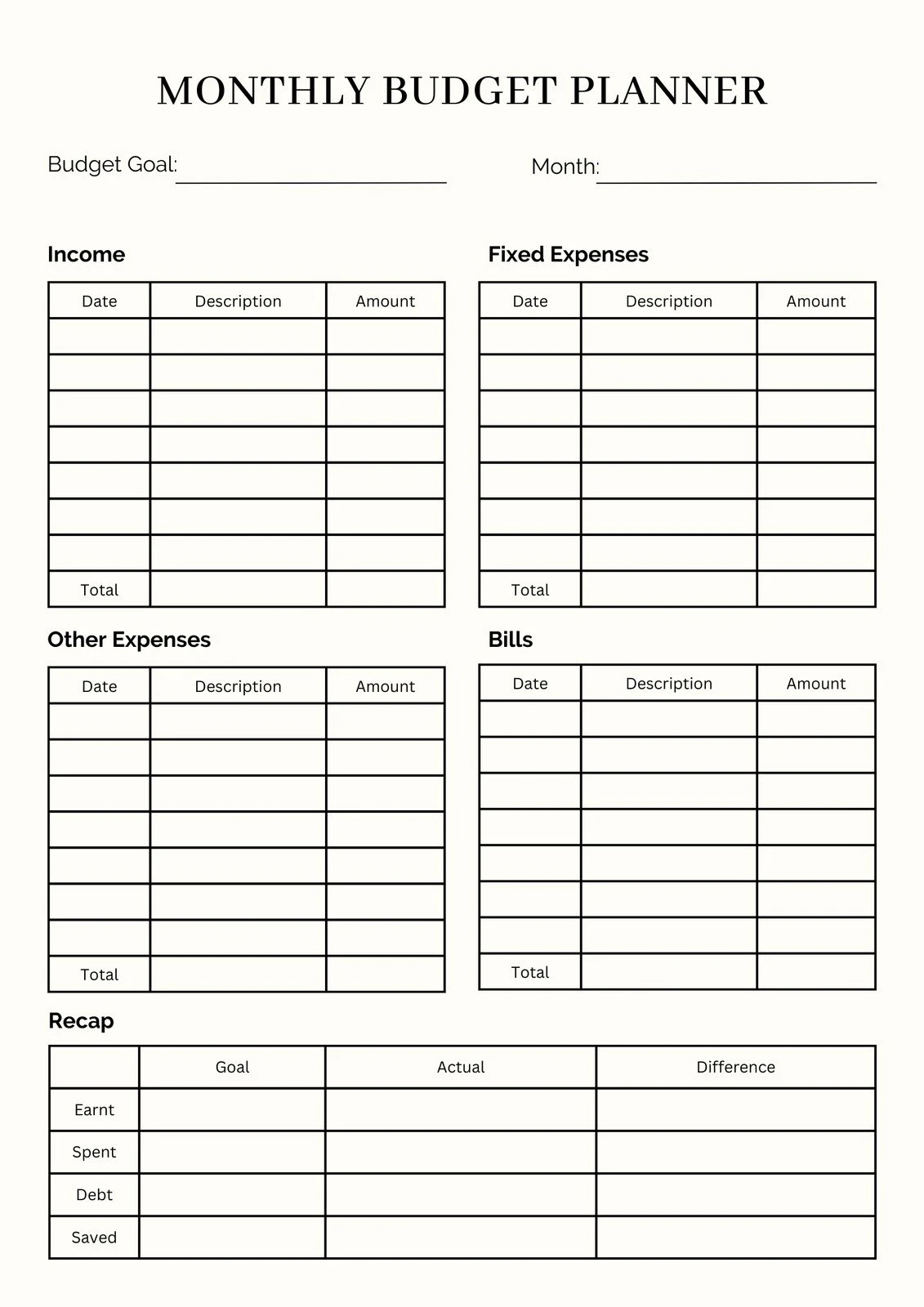
Managing your finances is crucial for achieving financial stability and reaching your long-term goals. One of the most effective tools for gaining control over your finances is creating a personal monthly budget.
A budget is a financial plan that tracks your income and expenses, ensuring that your bills are paid, debt is prevented, savings are built, and you are working towards your financial goals. It provides insight into where your money goes, helps reduce wasteful spending, and ensures that you have enough money each month to cover your needs and prepare for unexpected emergencies.
What Is A Personal Budget?
A personal budget is a detailed plan that outlines your income and expenses for a specific period, usually one month. It helps you track where your money is coming from and where it is going, allowing you to make informed decisions about your spending habits and financial priorities.
By creating a budget, you can allocate your money towards essential expenses, savings, debt repayment, and other financial goals.
7 Reasons You Should Make A Budget
Creating a monthly budget offers numerous benefits that can positively impact your financial well-being. Here are seven reasons why you should make a budget:
- Control Over Your Finances. A budget gives you a clear overview of your financial situation, allowing you to make informed decisions about your money.
- Prevent Debt. By tracking your expenses and ensuring that your income covers your needs, you can avoid accumulating debt.
- Build Savings. A budget helps you allocate money towards savings, allowing you to build an emergency fund and work towards your financial goals.
- Track Your Income and Expenses. With a budget, you can easily monitor where your money is coming from and where it is going, helping you identify areas for improvement.
- Reduce Wasteful Spending. By tracking your expenses, you can identify unnecessary expenditures and cut back on wasteful spending.
- Cover Your Needs. A budget ensures that you have enough money each month to cover your essential expenses, such as rent, utilities, and groceries.
- Prepare for Emergencies. By setting aside money for unexpected expenses, you can be better prepared to handle financial emergencies without going into debt.
How To Create A Monthly Budget
Creating a monthly budget involves several steps to help you effectively manage your finances:
1. Calculate Your Income
Start by determining your total monthly income, including your salary, bonuses, commissions, and any other sources of income.
2. List Your Expenses
Make a list of all your monthly expenses, including fixed expenses like rent, utilities, and loan payments, as well as variable expenses like groceries, dining out, and entertainment.
3. Set Financial Goals
Determine your short-term and long-term financial goals, such as saving for a vacation, paying off debt, or buying a home. Allocate a portion of your income towards these goals in your budget.
4. Allocate Your Income
Distribute your income to cover your essential expenses first, followed by savings, debt repayment, and other financial goals. Make sure to prioritize your needs over wants.
5. Track Your Spending
Monitor your spending throughout the month to ensure that you are staying within your budget. Use apps or spreadsheets to track your expenses and make adjustments as needed.
6. Review and Adjust
At the end of the month, review your budget to see how well you stuck to your plan. Make adjustments for the following month based on your spending habits and financial goals.
How To Manage Any Overspending
If you find yourself overspending in certain categories, there are several strategies you can use to get back on track:
- Identify Problem Areas. Determine where your overspending is occurring and why. Look for patterns and make adjustments accordingly.
- Cut Back on Non-Essentials. Reduce spending on non-essential items or activities to free up more money for essential expenses and savings.
- Use Cash Envelopes. Allocate cash for specific categories in envelopes to help you stick to your budget and avoid overspending.
- Automate Savings. Set up automatic transfers to your savings account to ensure that you are consistently saving money each month.
- Seek Professional Help. If you are struggling to manage your finances, consider consulting a financial advisor or credit counselor for guidance.
Personal Monthly Budget Template – Free Download
