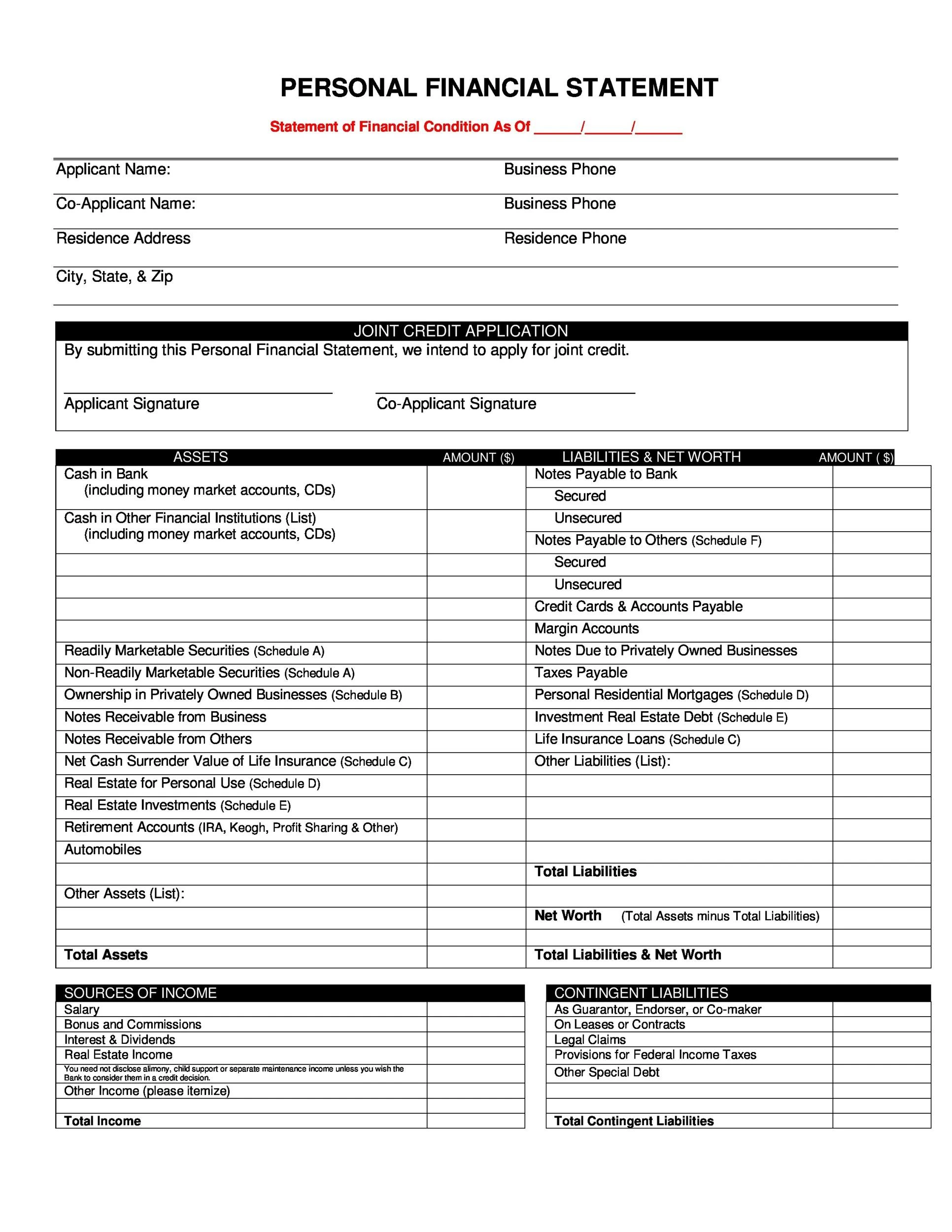
Managing your finances can sometimes feel like navigating through a maze, with various assets, liabilities, and financial goals to consider. One powerful tool that can help bring clarity to your financial situation is a personal financial statement. This spreadsheet serves as a snapshot of your financial health at a specific point in time, providing valuable insights into your net worth and helping you set achievable financial objectives.
Let’s delve deeper into the world of personal financial statements and understand how they can benefit you.
What is a Personal Financial Statement?
A personal financial statement is a detailed document that outlines the assets and liabilities of an individual, couple, or business. It provides a comprehensive overview of your financial standing by listing all your possessions (assets) and debts (liabilities).
This statement is typically created using a spreadsheet format, making it easy to update and track changes over time. By analyzing your personal financial statement, you can gain a clear understanding of your current financial status and make informed decisions about managing your money.
Why is a Personal Financial Statement Useful?
Creating a personal financial statement offers several benefits that can help you gain control over your finances:
- Track Net Worth: By documenting all your assets and liabilities, you can calculate your net worth, which is the difference between what you own and what you owe. Monitoring your net worth over time can help you gauge your financial progress and identify areas for improvement.
- Set Financial Goals: A personal financial statement allows you to establish clear financial objectives based on your current financial situation. Whether you aim to save for retirement, purchase a home, or pay off debt, having a detailed overview of your finances can guide your goal-setting process.
- Apply for Credit or Loans: Lenders often require personal financial statements when assessing an individual’s creditworthiness. Having a well-organized statement can enhance your chances of securing favorable terms on loans, mortgages, or other forms of credit.
What are Assets and Liabilities?
Assets and liabilities are key components of a personal financial statement, representing the resources you own and the obligations you owe, respectively. Here’s a breakdown of each category:
Assets
Assets encompass everything you own that holds value and can be converted into cash. Common types of assets include:
- Cash: This includes money in your checking and savings accounts, as well as any physical cash on hand.
- Investments: Stocks, bonds, mutual funds, and other investment vehicles fall under this category.
- Real Estate: The value of your primary residence, rental properties, or other real estate holdings.
- Personal Property: Vehicles, jewelry, electronics, and other valuable possessions.
- Retirement Accounts: Savings in retirement vehicles such as 401(k) or IRA accounts.
Liabilities
Liabilities represent your financial obligations, such as debts and other financial responsibilities. Common liabilities include:
- Mortgage Debt: The amount you owe on your mortgage or home loan.
- Consumer Debt: Credit card balances, personal loans, and other forms of consumer debt.
- Student Loans: Outstanding balances on student loans used to finance education.
- Auto Loans: Amounts owed on car loans or leases.
- Other Debts: Any additional financial obligations, such as medical bills or taxes owed.
How is Net Worth Calculated?
Net worth is a crucial metric that reflects your overall financial health. To calculate your net worth, simply subtract your total liabilities from your total assets. The resulting figure represents your net worth, which can be positive (assets exceed liabilities) or negative (liabilities exceed assets). Monitoring changes in your net worth over time can illustrate the progress you’re making toward achieving your financial goals.
What If You Have a Negative Net Worth?
If your personal financial statement reveals a negative net worth, don’t panic. This situation simply means that your debts outweigh your assets at the current moment. To improve your financial position and work towards a positive net worth, consider the following steps:
- Reduce Debt: Focus on paying down high-interest debts and reducing overall debt levels to gradually improve your net worth.
- Boost Savings: Increase your savings rate and prioritize building up your assets through consistent contributions to retirement accounts or investment portfolios.
- Create a Budget: Develop a realistic budget to track your income and expenses, identifying areas where you can cut costs and increase your savings rate.
- Seek Financial Guidance: Consult with a financial advisor or planner to receive personalized recommendations and strategies for improving your financial situation.
- Set Achievable Goals: Establish clear financial goals and milestones to track your progress towards achieving a positive net worth and building a secure financial future.
By taking proactive steps to strengthen your financial foundation and diligently tracking your progress through a personal financial statement, you can work towards achieving your long-term financial objectives and securing a stable financial future for yourself and your loved ones.
Personal Financial Statement Template – Free Download
