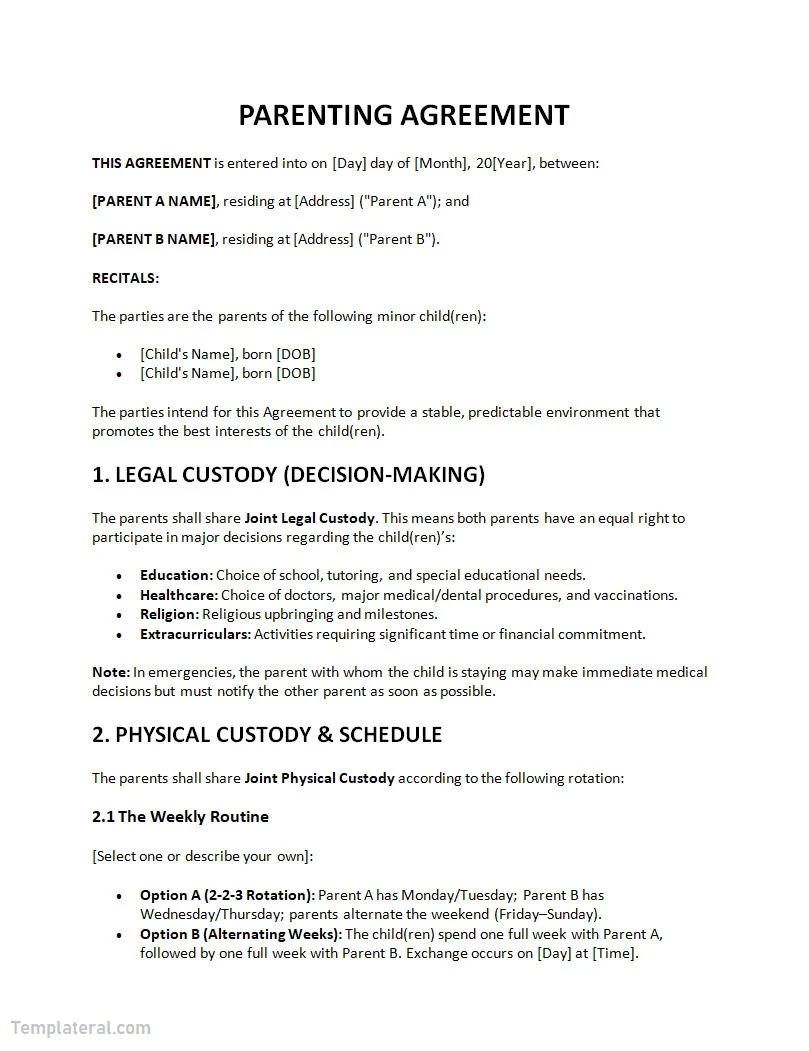
Parenting agreements are essential documents that outline the rights and responsibilities of each parent after a separation or divorce. These agreements aim to minimize conflict, provide stability for the child, and ensure that key decisions about the child’s upbringing are made collaboratively.
By creating a detailed plan for co-parenting, parents can establish clear guidelines for custody, visitation schedules, living arrangements, and major decision-making areas such as education, healthcare, and finances.
What is a Parenting Agreement?
A parenting agreement, also known as a co-parenting plan, is a written document that outlines the terms of how parents will share the responsibilities of raising their child after a separation or divorce.
These agreements are designed to promote cooperation and communication between parents to ensure the well-being of the child.
Why Create a Parenting Agreement?
There are several reasons why creating a parenting agreement is crucial after a separation or divorce:
- Minimize Conflict: A detailed parenting agreement can help reduce conflicts between parents by clearly defining each parent’s rights and responsibilities.
- Provide Stability for the Child: By establishing a consistent routine and structure through a parenting agreement, children can feel more secure during a difficult time.
- Ensure Collaborative Decision-Making: Parenting agreements allow both parents to have a say in important decisions regarding the child’s upbringing, such as education, healthcare, and extracurricular activities.
What to Include in a Parenting Agreement
When creating a parenting agreement, it is essential to include the following key components:
- Custody and Visitation Schedules: Outline the specific days and times each parent will have custody of the child, as well as a visitation schedule for the non-custodial parent.
- Living Arrangements: Specify where the child will live and how parental responsibilities will be divided, including transportation arrangements.
- Major Decision-Making Areas: Address how major decisions regarding the child’s education, healthcare, religious upbringing, and financial support will be made.
How to Create a Parenting Agreement
Follow these steps to create a comprehensive parenting agreement:
1. Collaborate with the Other Parent
Work together with the other parent to draft a parenting agreement that reflects both of your wishes and the best interests of the child.
2. Seek Mediation or Legal Assistance
If necessary, consult with a mediator or seek legal advice to ensure that the parenting agreement is legally binding and meets all requirements.
3. Be Flexible and Open-Minded
Be willing to compromise and consider the other parent’s perspective when creating the parenting agreement to promote a positive co-parenting relationship.
4. Review and Revise Regularly
Periodically review and update the parenting agreement as needed to accommodate changes in the child’s needs or the parents’ circumstances.
5. Communicate Effectively
Maintain open and honest communication with the other parent to address any issues or concerns that may arise regarding the parenting agreement.
6. Put the Child’s Best Interests First
Always prioritize the well-being and best interests of the child when making decisions within the parenting agreement.
Tips for Successful Parenting Agreements
Consider the following tips to ensure a successful co-parenting relationship and effective parenting agreement:
- Stay Focused on the Child: Keep the child’s needs and interests at the forefront of all decisions and discussions.
- Be Consistent: Maintain a consistent routine and follow through on agreements to provide stability for the child.
- Communicate Respectfully: Practice effective communication skills and be respectful of the other parent’s opinions and perspectives.
- Seek Support When Needed: Don’t hesitate to seek support from a counselor, mediator, or legal professional if conflicts arise.
- Prioritize Self-Care: Take care of yourself physically, emotionally, and mentally to be the best parent you can be for your child.
Parenting Agreement Template – Download
